
Resources for tackling violence against women
These resources are designed to encourage congregations, communities, and individuals to explore the issues of violence against women, girls, and children.
Integrity have produced these graphics to be used to raise awareness of domestic abuse and gender-based violence.
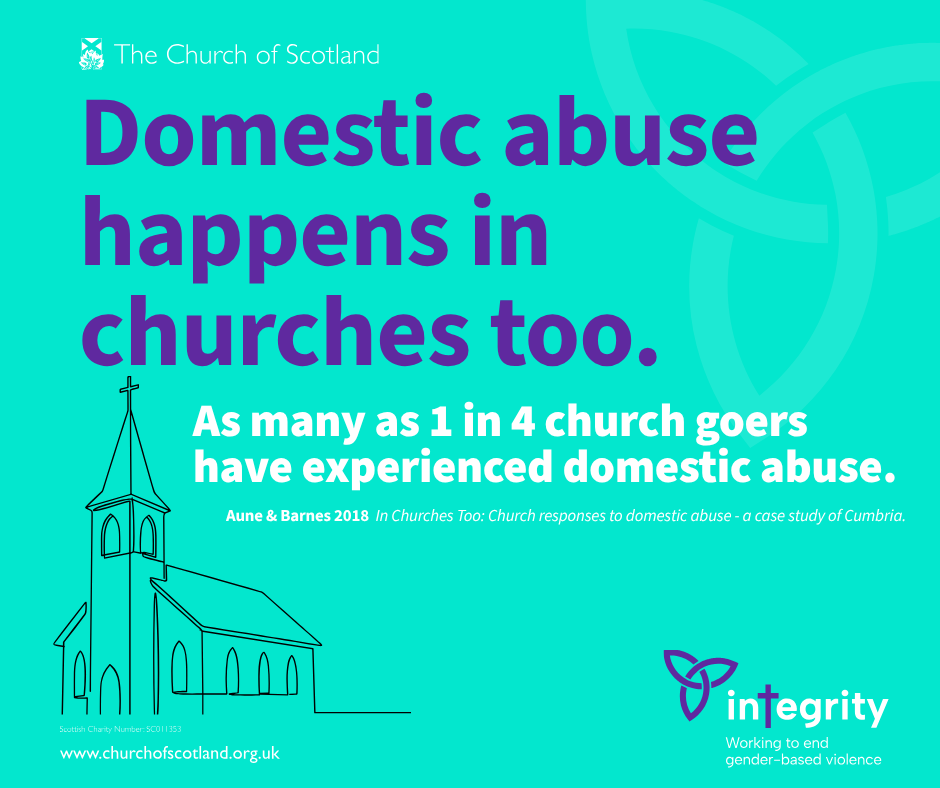
They can be used on social media or printed as posters, and we have suggested some wording to use as captions as well. You are free however, to use them in whichever way is most appropriate in your context
They were first used as part of the ‘Draw the Line' campaign developed by Integrity to mark the UN Women's 16 Days of Activism against Gender-Based Violence in 2026.
Social Media Graphics and captions to share
Day 1 - November 25
Violence against women comes to steal, to kill and to destroy. But at the heart of the Gospel, Jesus comes to us with the promise of abundant life.”
From Living a Theology that Counters Violence against Women General Assembly Report 2014
We believe that women and girls should be safe from harm everywhere.
To mark the UN Women’s 16 Days of Activism Against Gender-Based Violence, Integrity, the Church of Scotland’s Gender-Based Violence task group, has developed the ‘Draw the Line’ campaign.
Starting today, the International Day for the Elimination of Violence Against Women, and ending 10 December, Human Rights Day, the campaign will help congregations share the message that women and girls should be safe wherever they go.
And that means in churches too.
On our website you can find resources to share over the next 16 days, as well as posters and leaflets to display in your church buildings to raise awareness and support victims and survivors of gender-based violence.
Day 3 - November 27
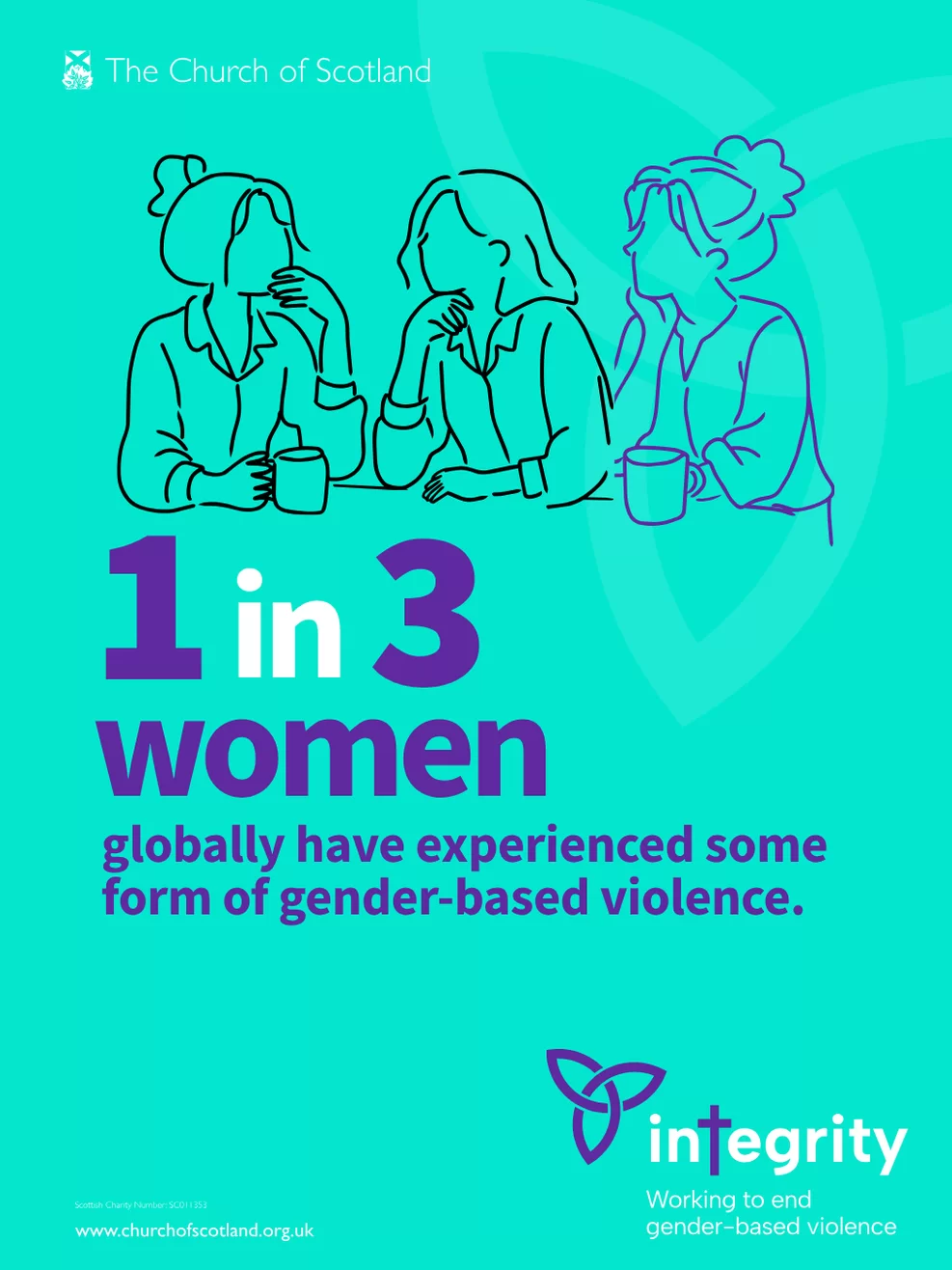
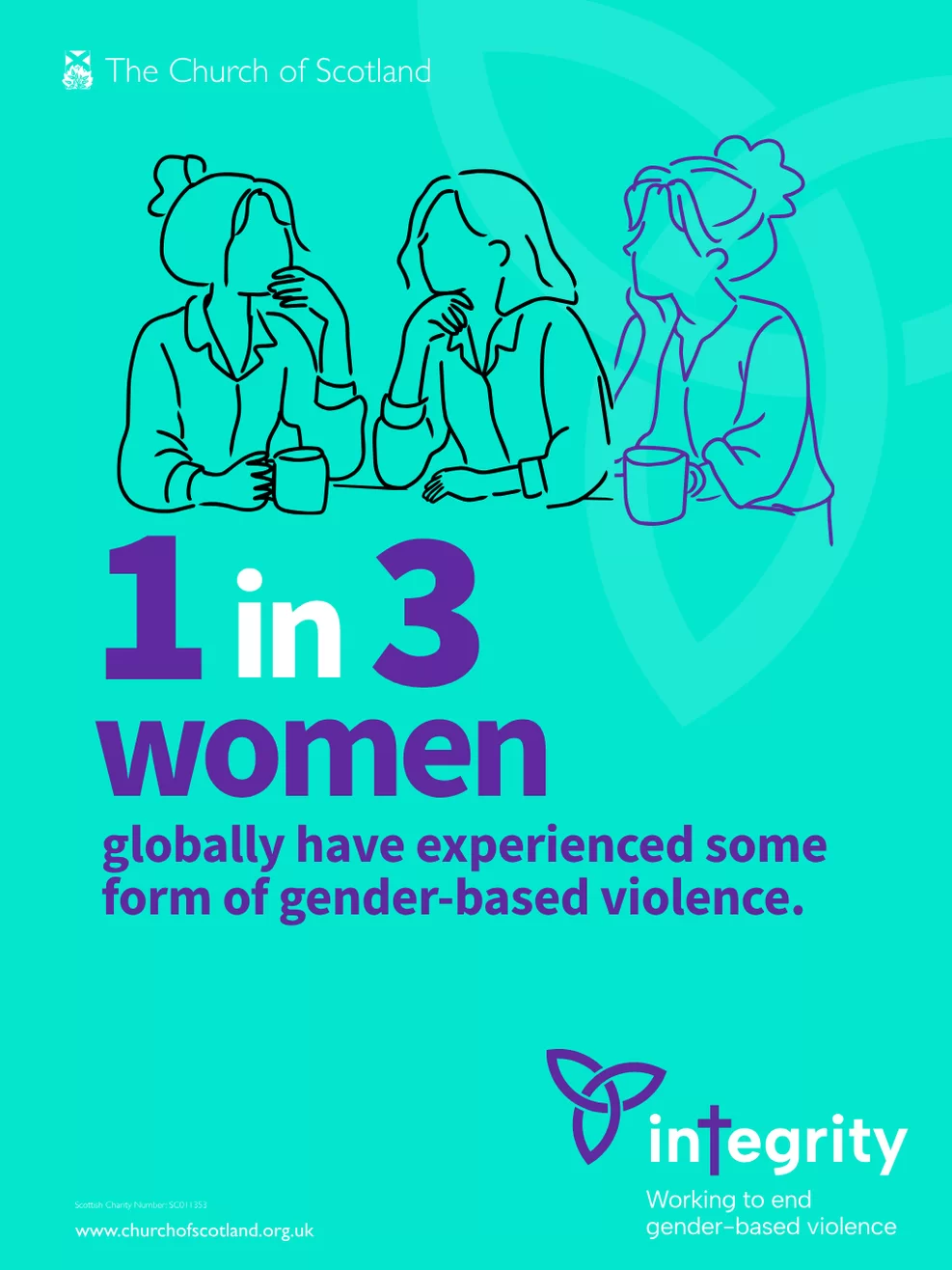
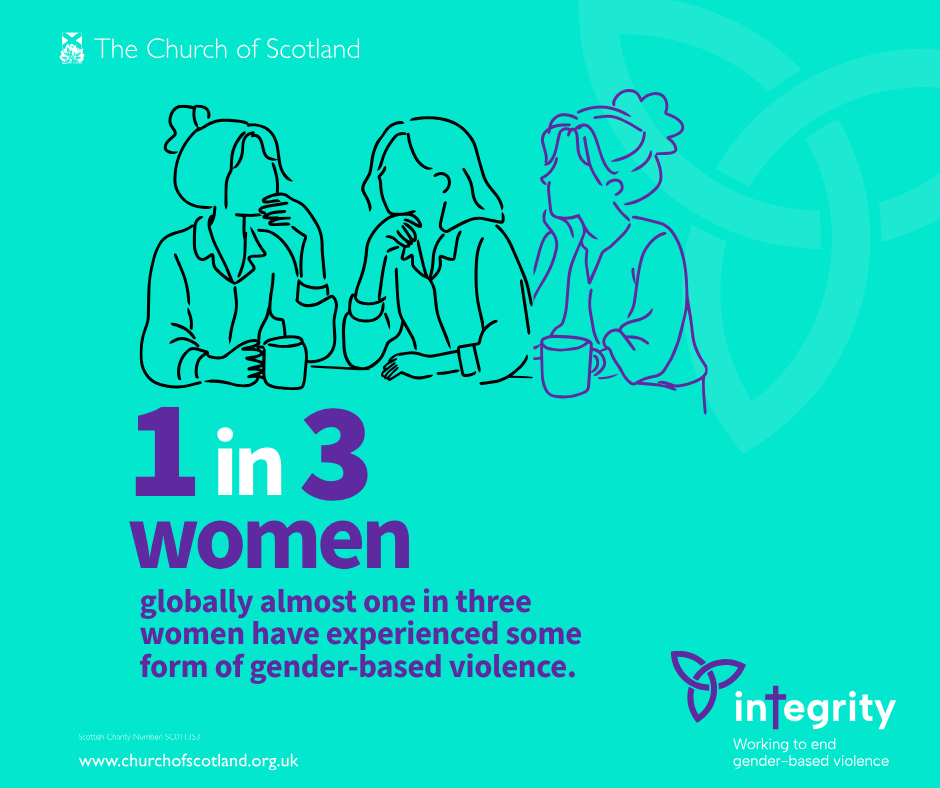
Globally, 1 in 3 women will experience gender-based violence.
Gender-based violence includes, but is not limited to, rape, domestic abuse, stalking and harassment, and forced marriage.
These crimes can happen to anyone, but they are overwhelmingly committed by men against women and girls.
They are an abuse of power and are a symptom of global inequalities between men and women.
(source )
Day 5 - November 29
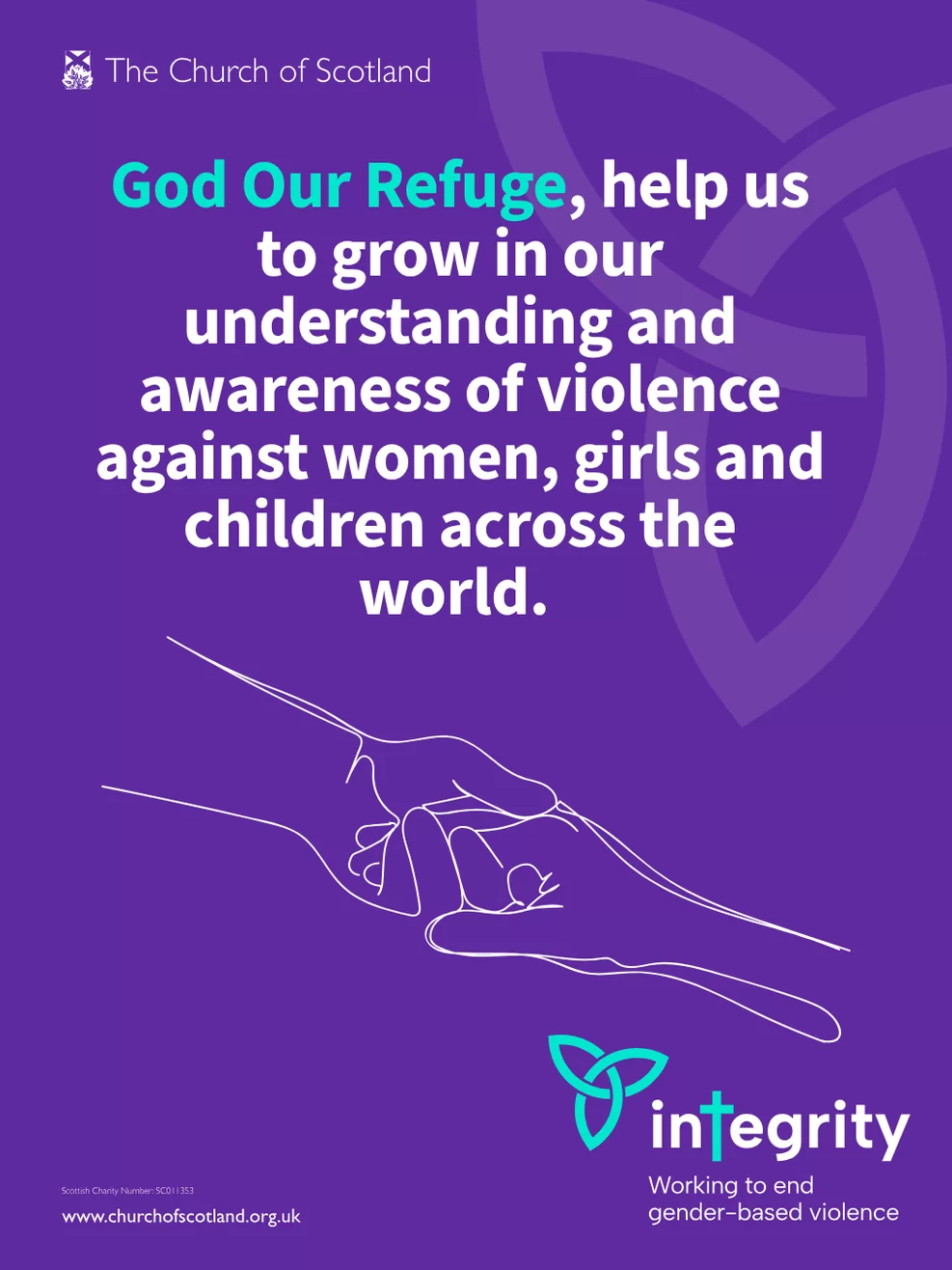
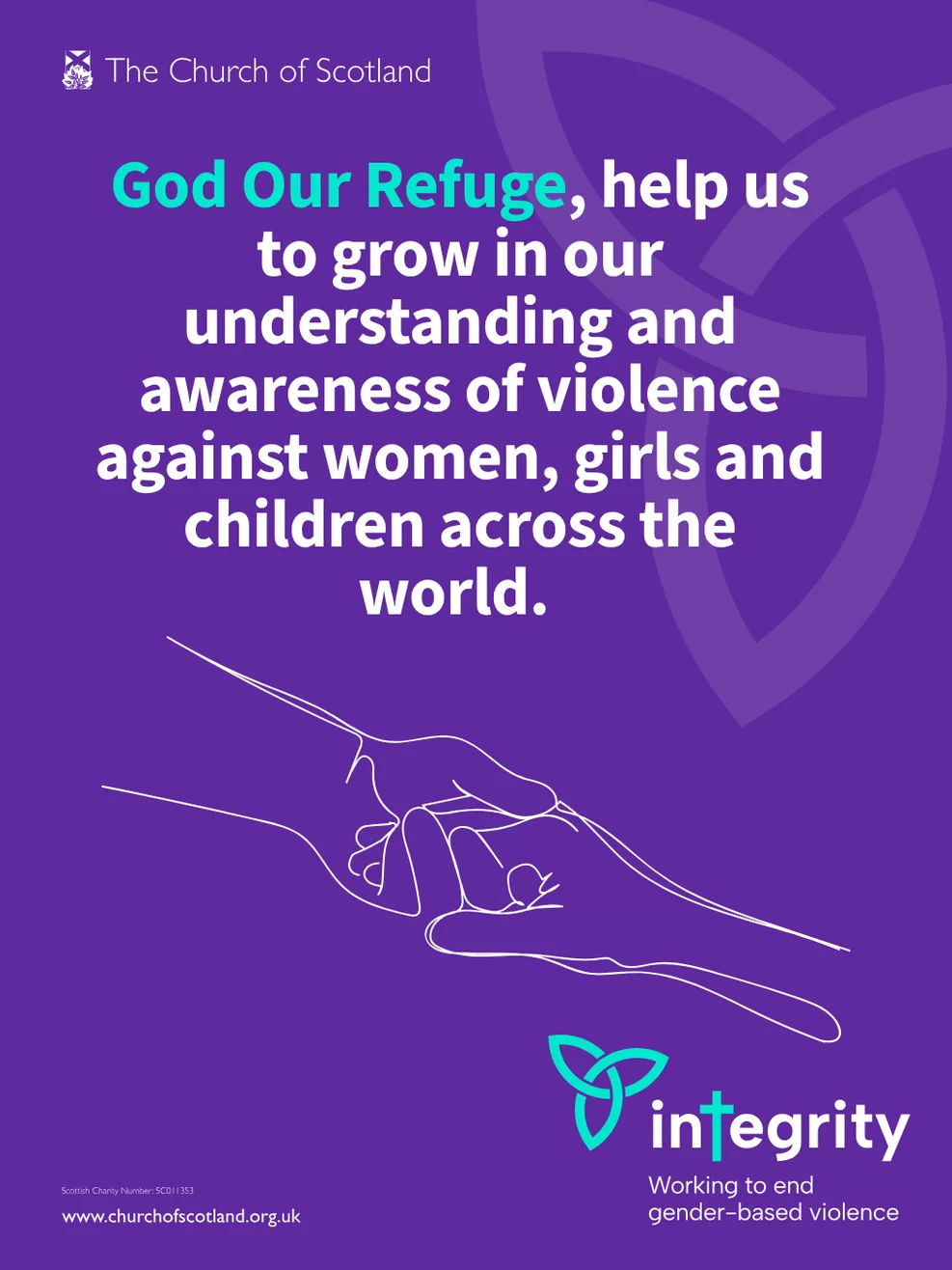
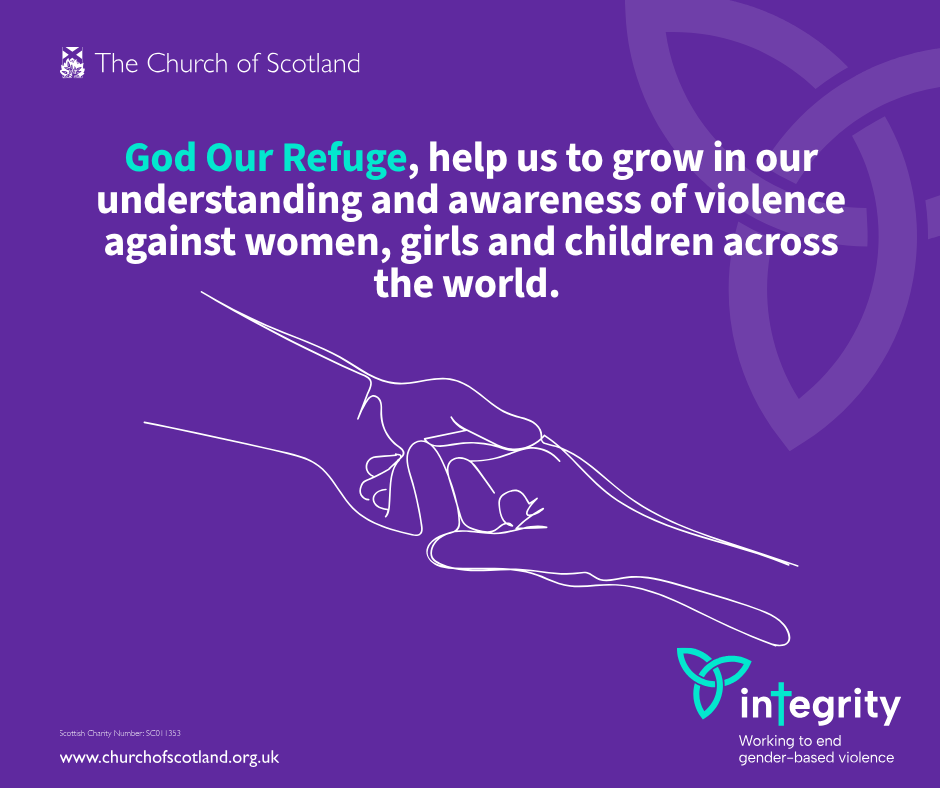
This Sunday, pray for women, girls and children around the world who have become victims of gender-based violence.
Day 7 - December 1
Domestic abuse is one of the most common types of gender-based violence.
In Scotland, domestic abuse is legally defined as any form of physical, verbal, sexual, psychological or financial abuse which might amount to criminal conduct, and which takes place within the context of a relationship, or between ex-partners. Domestic abuse can happen to anyone, but most victims/survivors of domestic abuse are women.
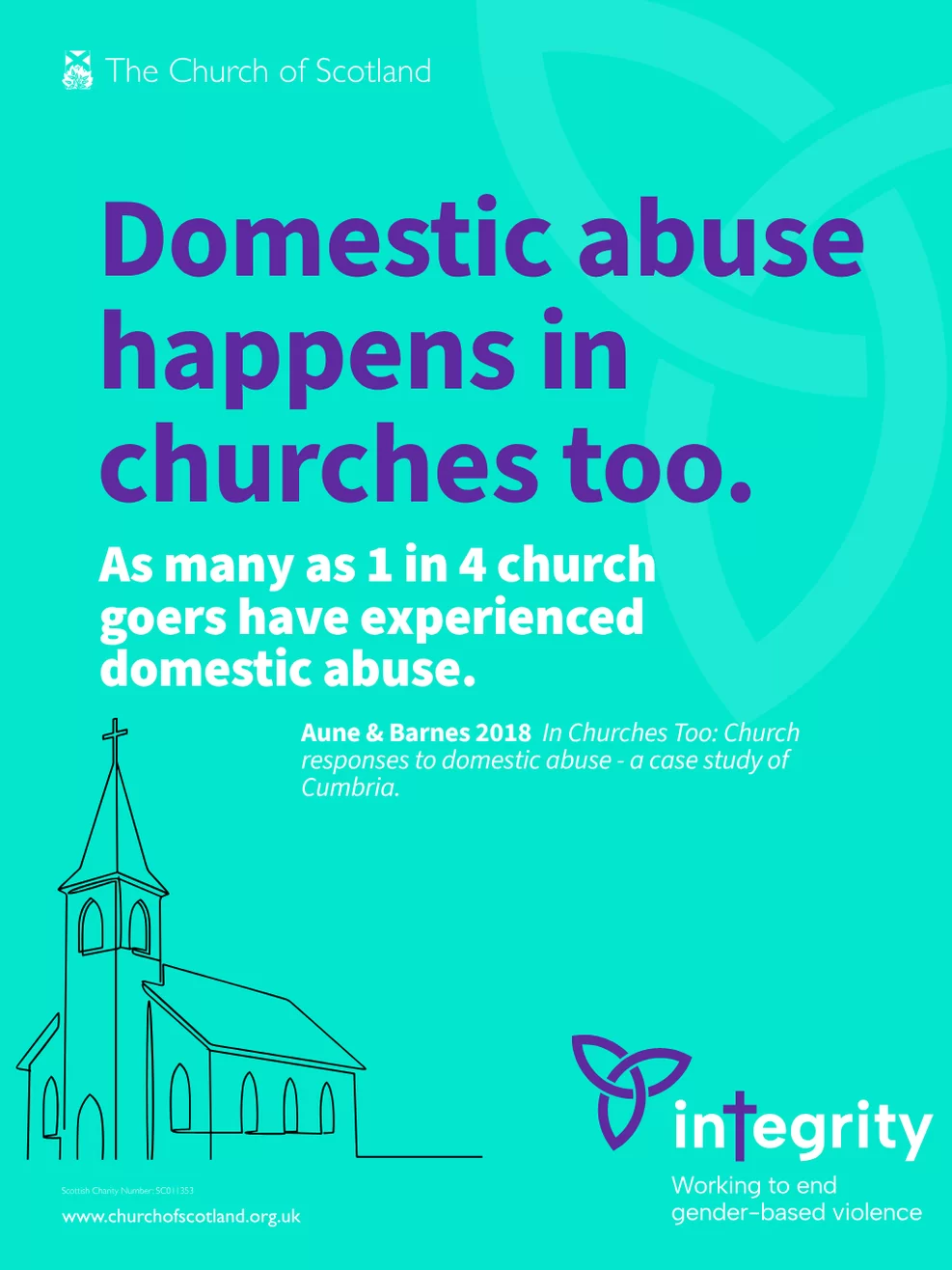
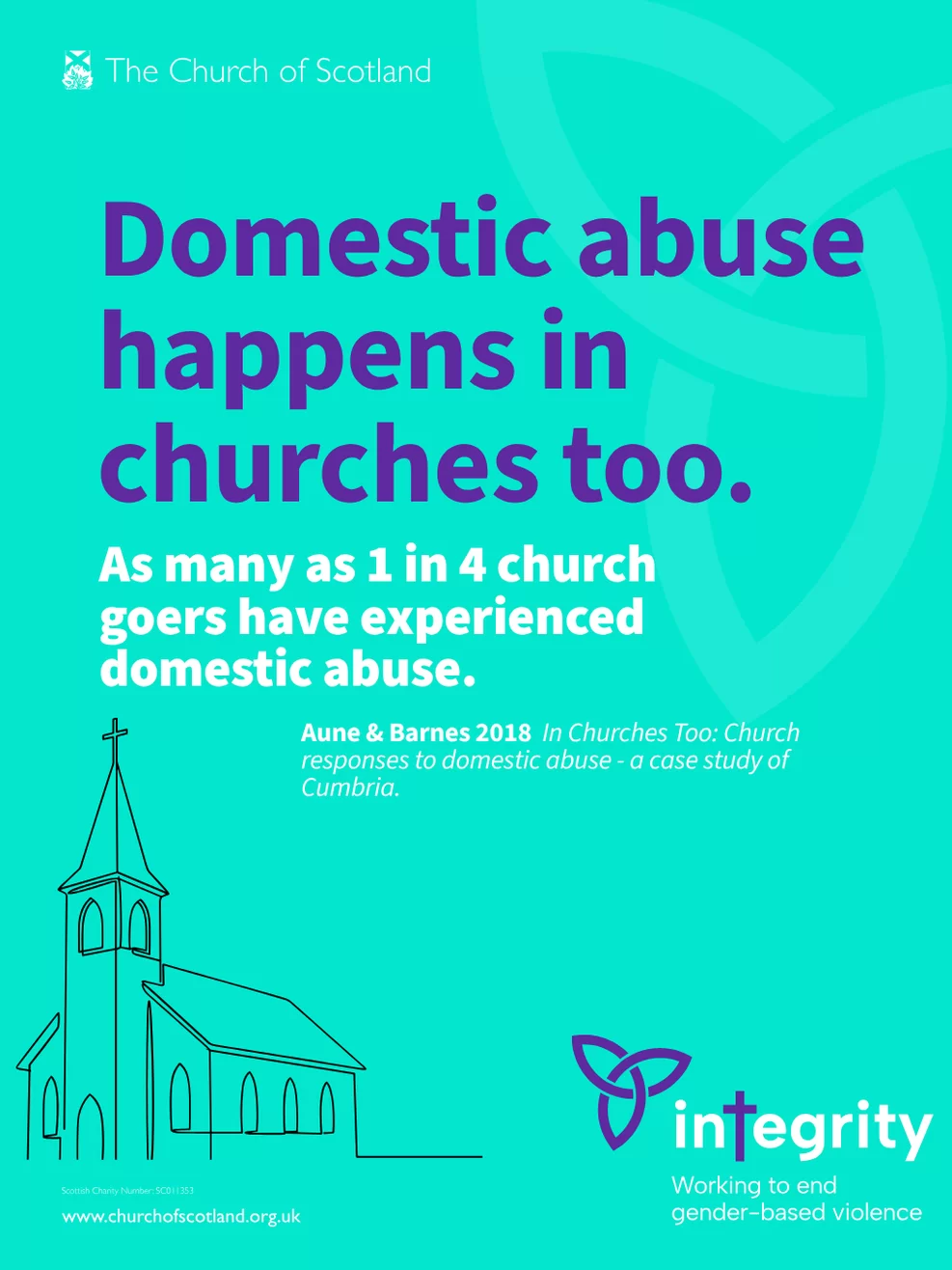
Domestic abuse happens across all parts of society. Research from the Christian domestic abuse charity Restored found that domestic abuse is almost as prevalent in churches as it is across wider society.
(Source: Domestic abuse statistics and Aune, Kristin & Barnes, Rebecca (2018) In Churches Too: Church Responses to Domestic Abuse – A case study of Cumbria, Coventry: Coventry University and Leicester: University of Leicester.
Day 9 - December 3
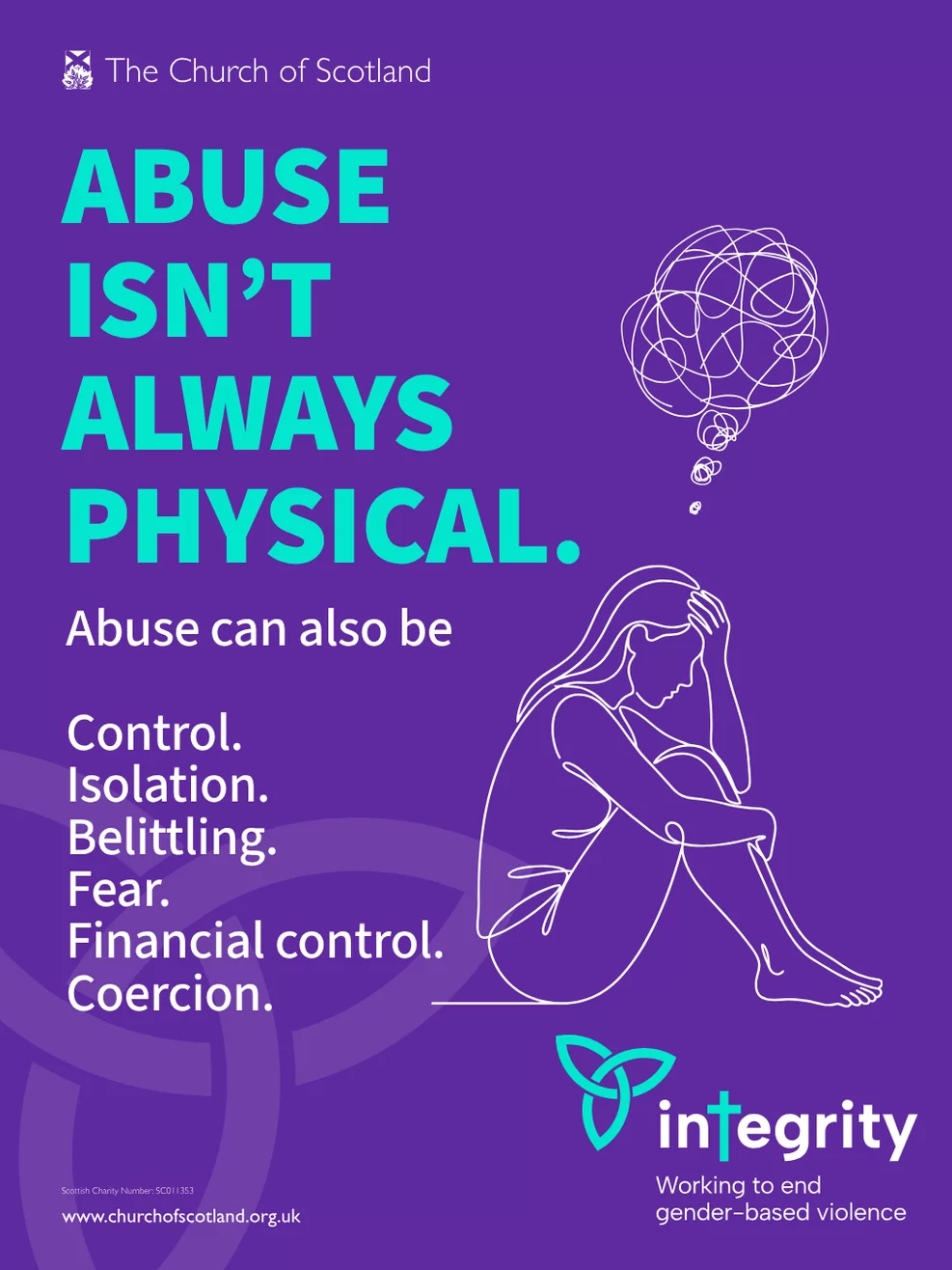
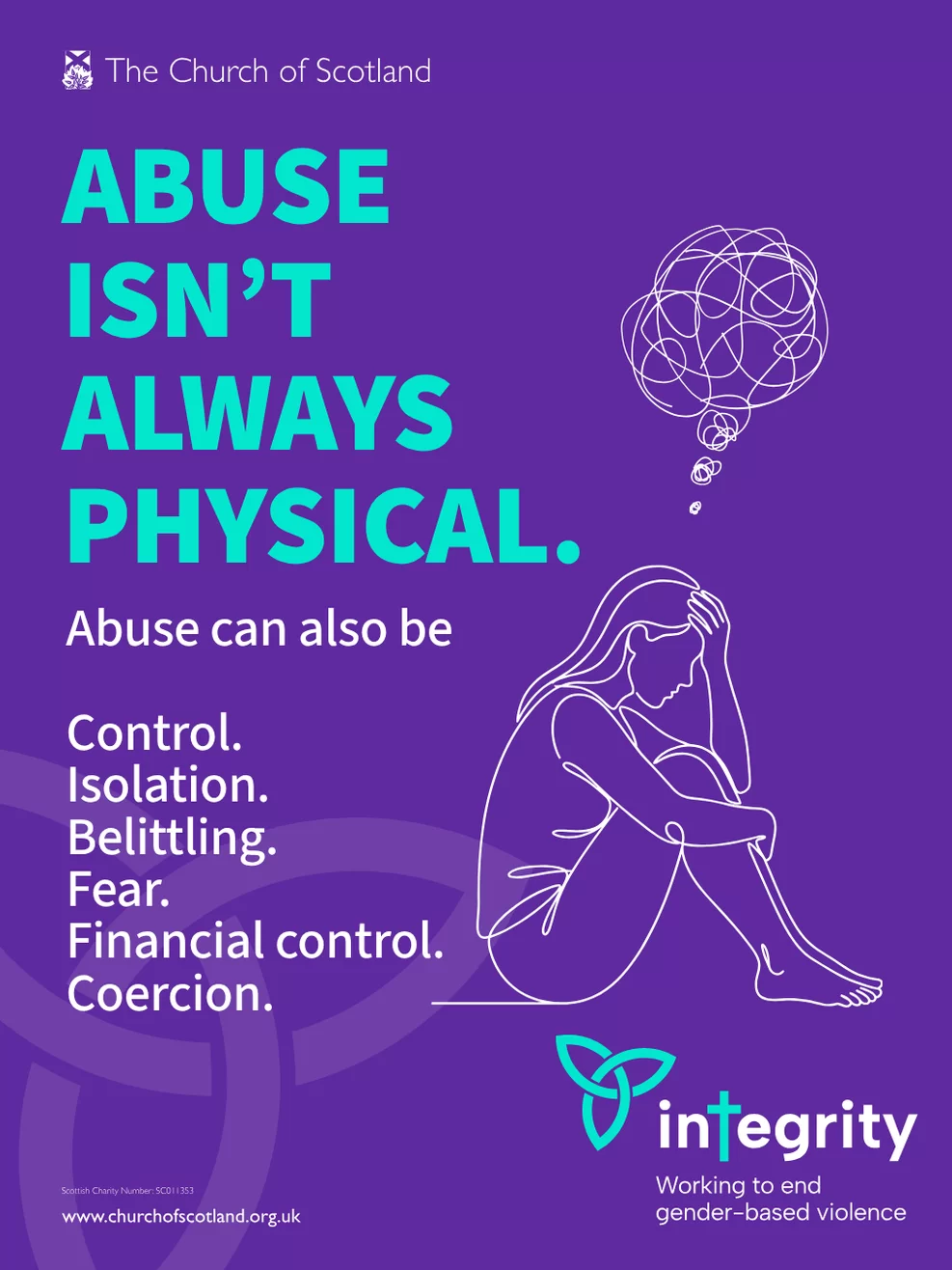
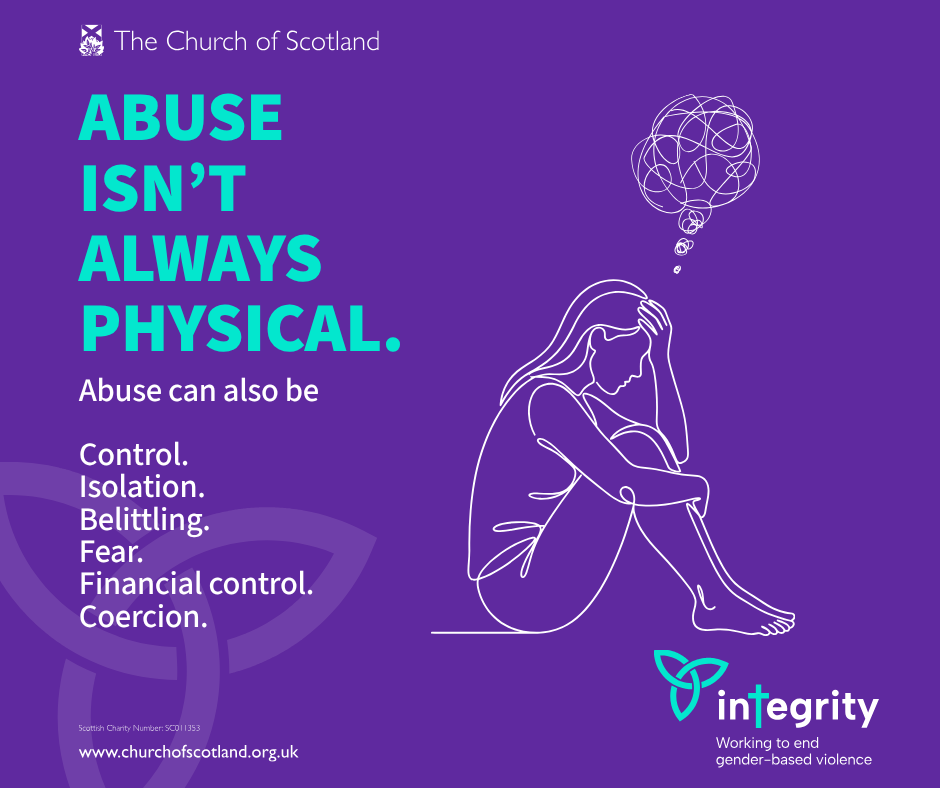
Knowing and sharing the signs of domestic abuse can help victims/survivors know that what they are suffering is real and is never okay.
Lots of people think that the only type of domestic abuse is physical violence but there are many others. Abuse may start as one kind and progress to different forms, or an abuser might carry out multiple types of abuse at once.
(Source: Women’s Aid Scotland)
Day 11 - December 5
Abuse is not part of God’s plan for our relationships. It is the abuser who breaks the relationship, not the victim – even if the victim is the one who eventually chooses to leave.
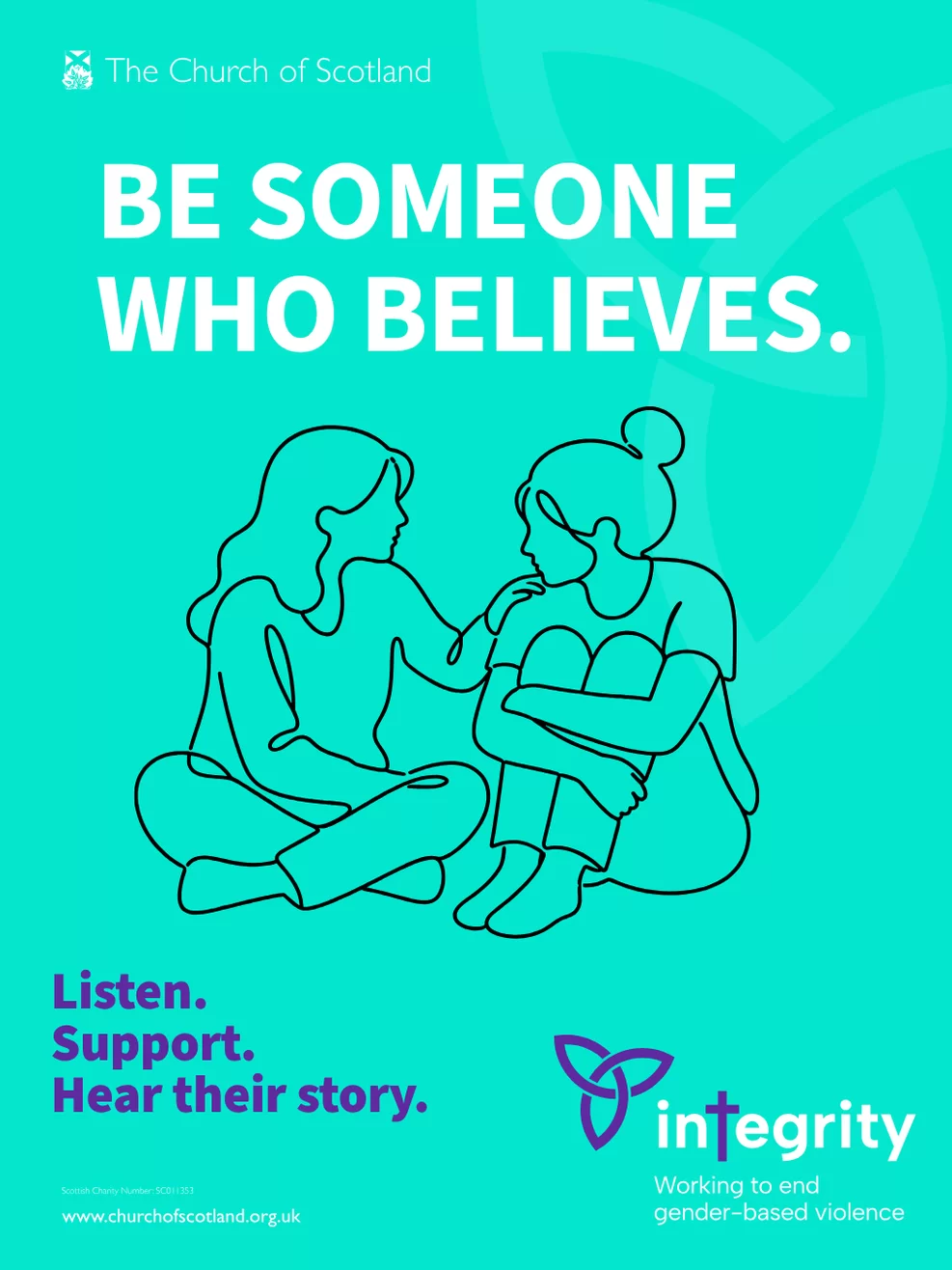
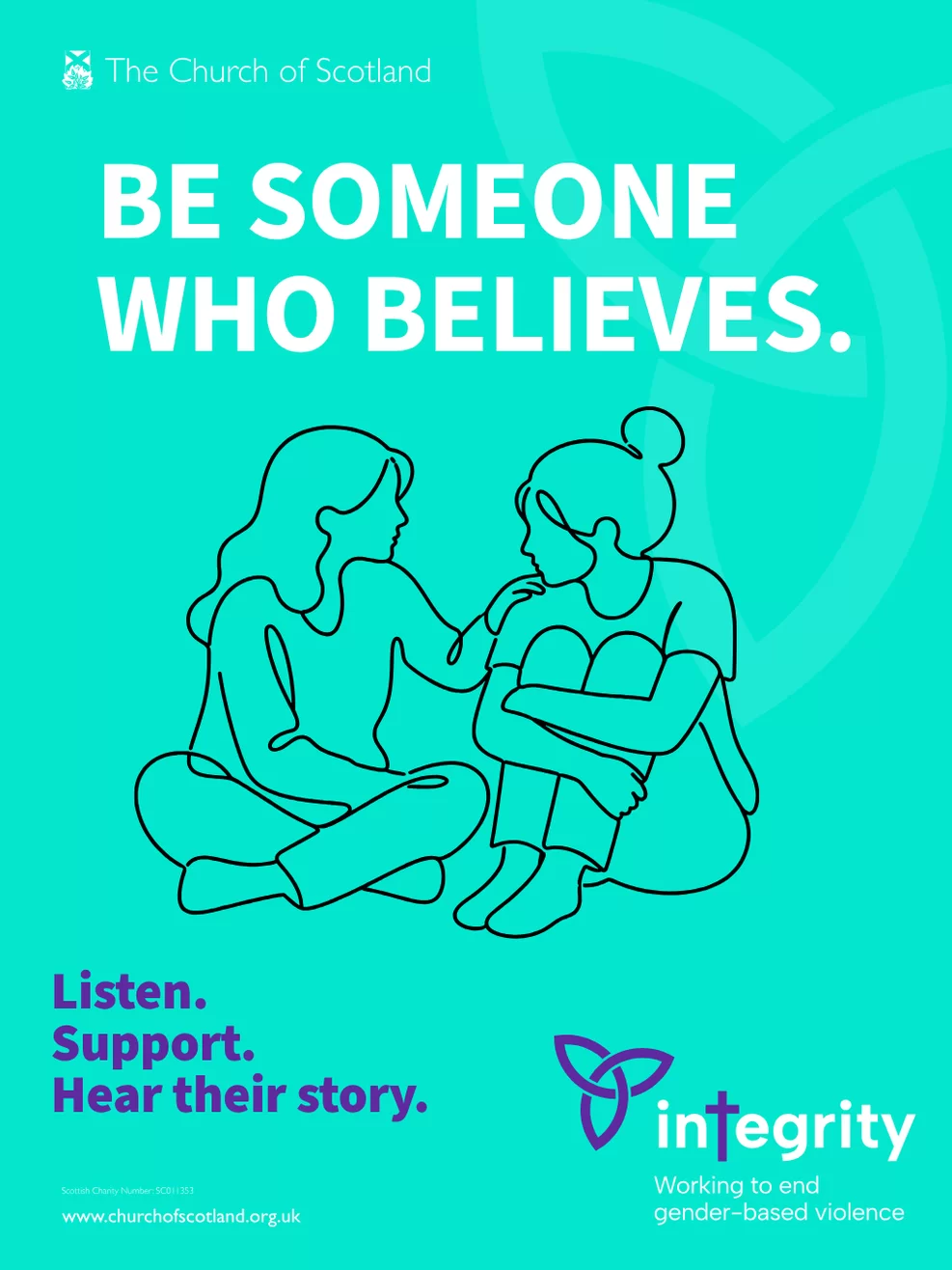
One of the most important ways you can support a victim/survivor of domestic abuse is to listen to their story, reassure them that you believe them, and offer simple practical help. Be open and supportive and don’t pressure anyone to do anything they are not comfortable with.
If you are worried about someone, don’t try to solve problems on your own. It is always best to get advice from an organisation who works directly with victims and survivors of domestic abuse. Those in ministry, safeguarding or eldership positions must also contact the Church of Scotland Safeguarding Service.
(source: SafeLives Scotland)
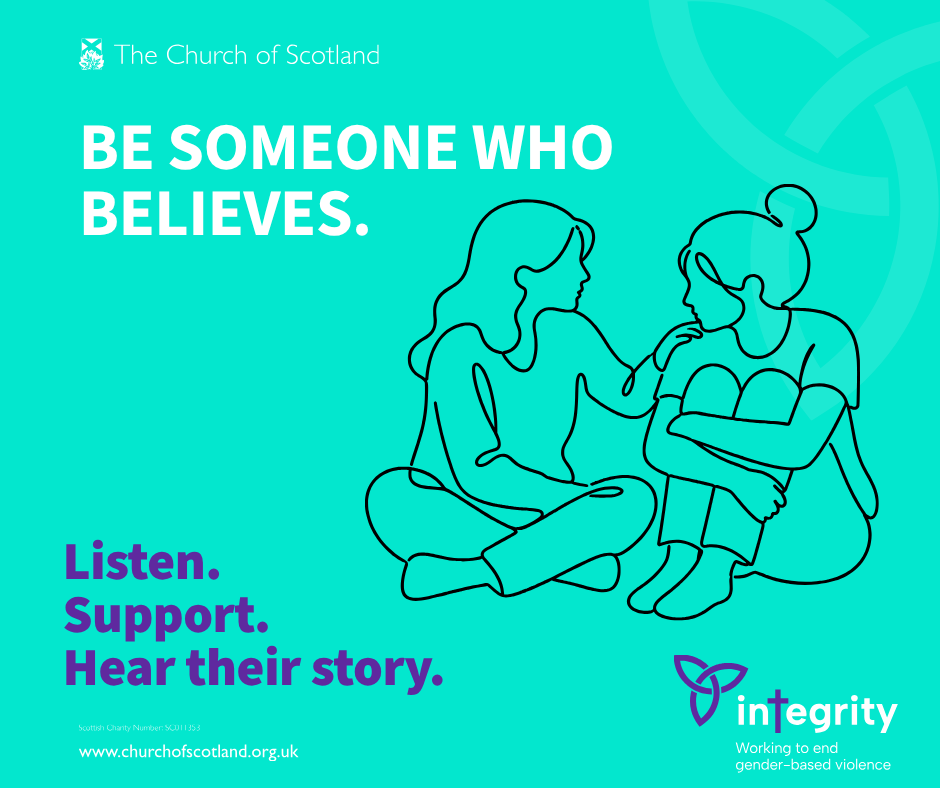
Day 13 - December 7
Staying silent about abuse almost always benefits the abuser. Silence allows abuse to continue and to go unchallenged. Raising our voices and talking amount domestic abuse brings it into the light.
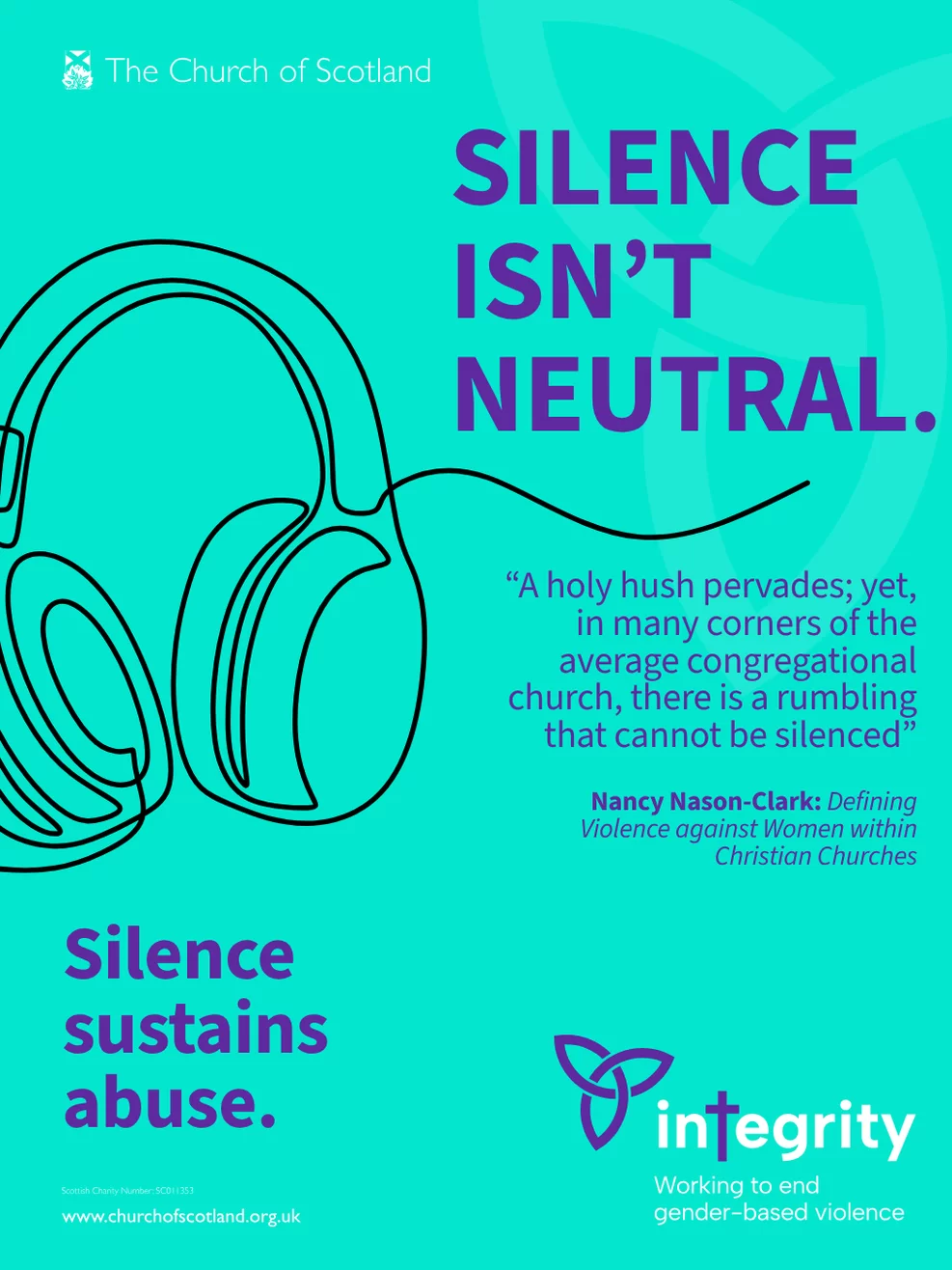
Day 15 - December 9
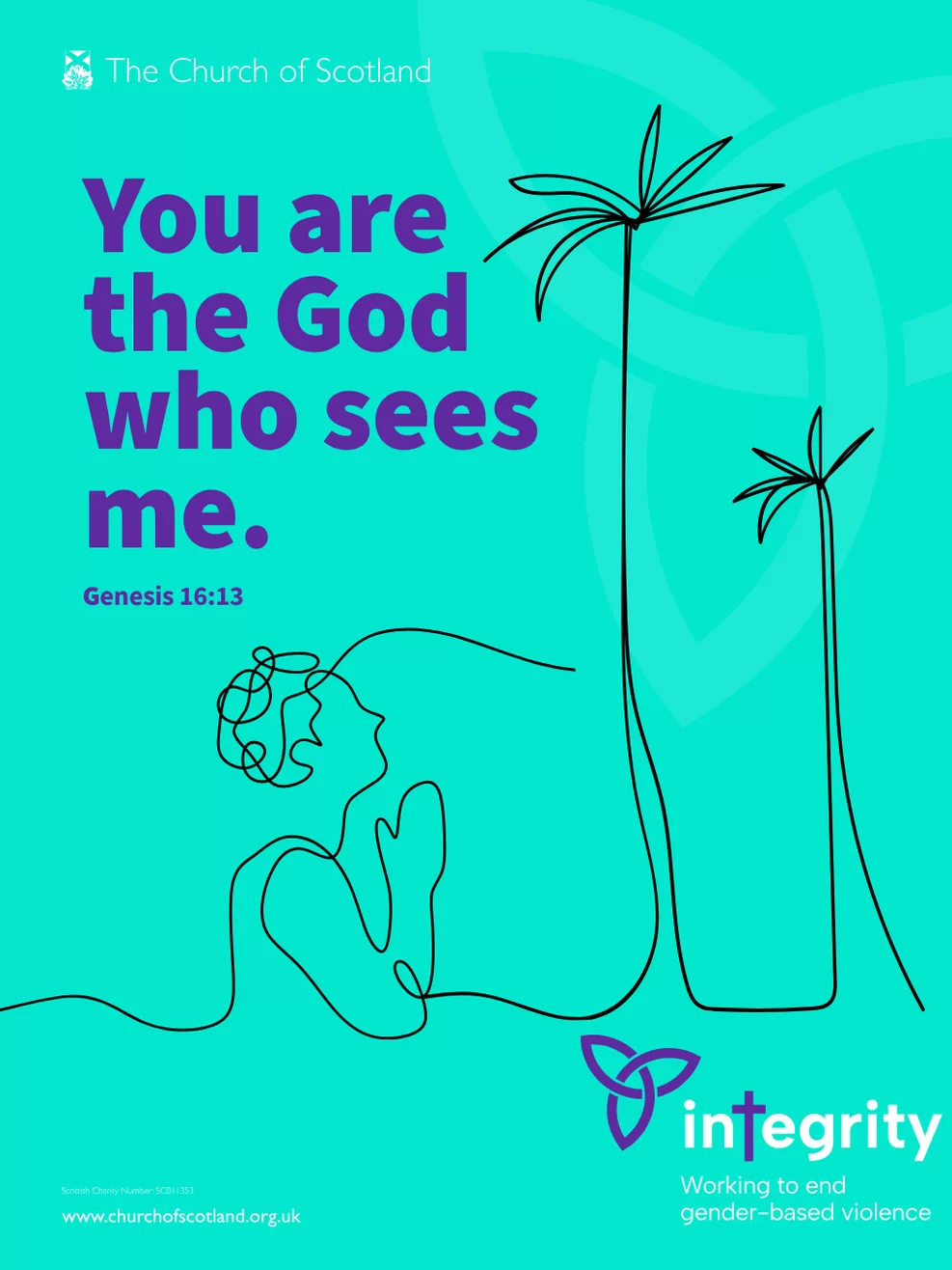
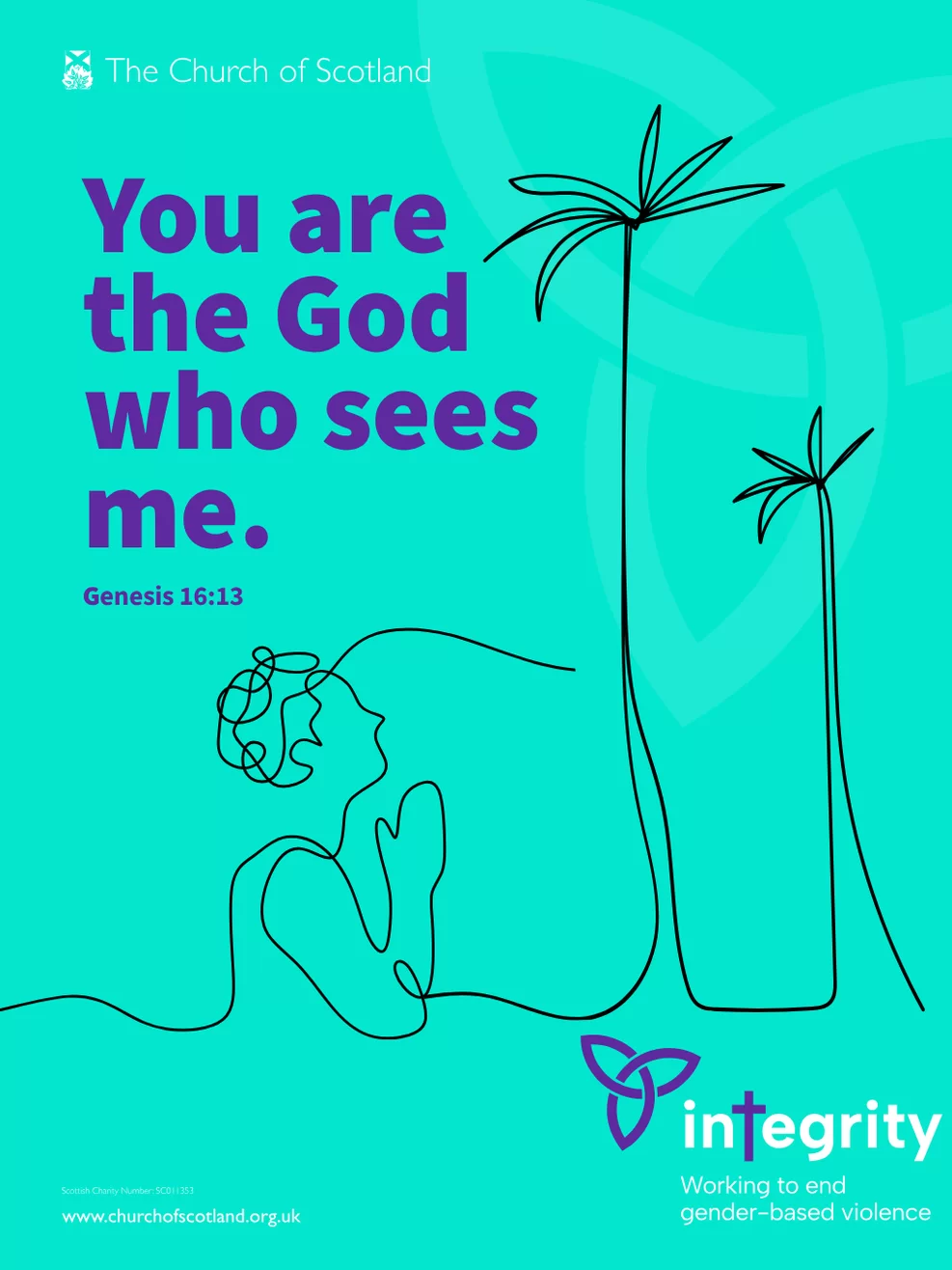
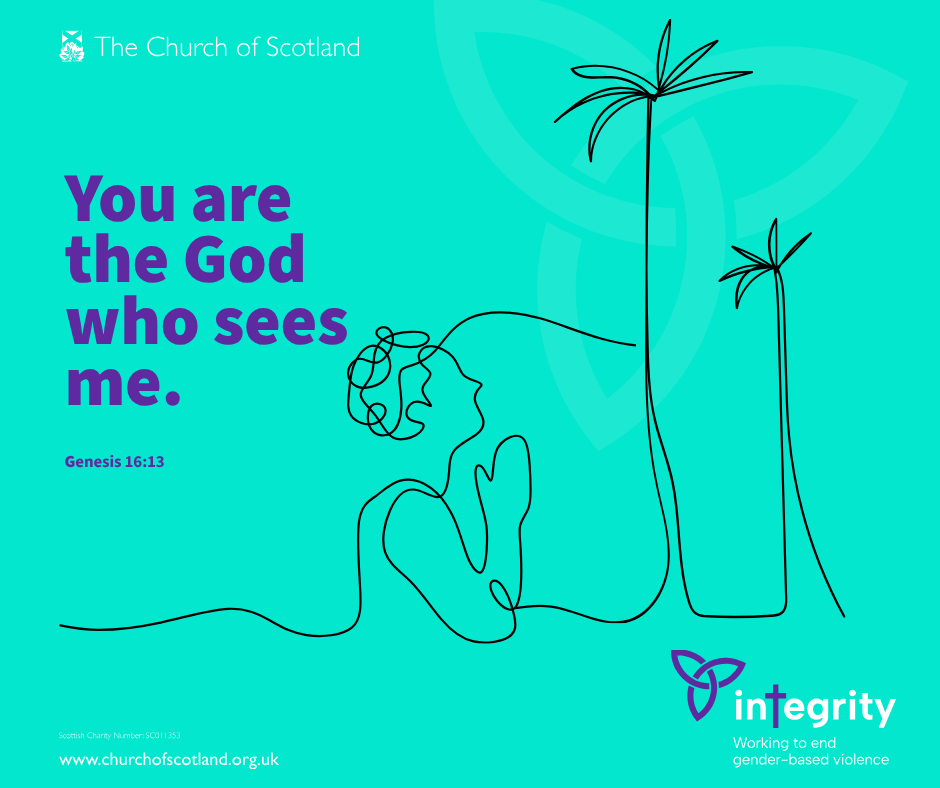
Victims and survivors of gender-based violence are never alone. Hagar’s story shows us that even after abuse and suffering there is hope.
Hagar is a slave in a foreign land forced to bear a child in the place of her mistress, against her will and with no control over her own body. After she suffers abuse, she flees to the desert wilderness, pregnant and alone. There, God meets her pain and suffering with love and the promise of redemption. She gives God the name El Roi – the God who sees me.
Hagar’s abuse and her relationships with those who caused it – Abram (Abraham) and Sarai (Sarah) - are complex. But, her story illustrates how God comes to us at our most broken and can shoulder the most complicated of human pain. God sees us and comes with the promise to restore us.
Information on addressing violence against women
These resources are designed to provide information about some of the issues we are working to tackle. Using them can help to support congregations and church leaders who want to learn a bit more about the topic.
What we can do
This guide has some helpful ideas about the steps that churches, congregations, or individuals can take to address violence against women, girls, and children.
- Download the What We Can Do resource
- Download the Integrity information leaflet and display this in your meeting areas
Integrity Poster
This poster was designed to raise awareness of violence against women in church settings. The poster includes contact details for the main national support services and was designed to be displayed in bathroom cubicles in churches. This can be a great place to highlight support information as people can read it and find out how to get help in a private space.
Further reading
The resources below contain more in-depth reading about violence against women for those who want to learn more.