
Revised Common Lectionary
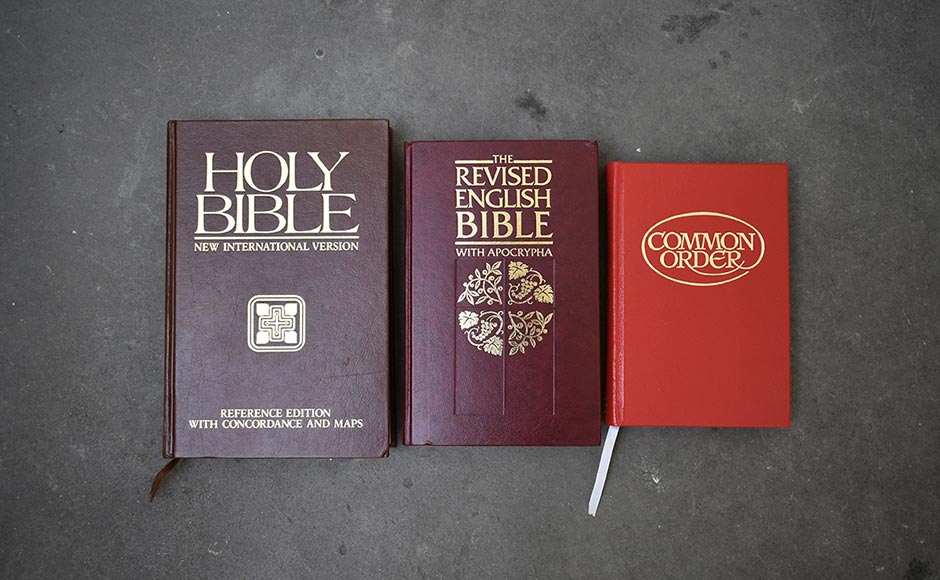
Many Church of Scotland congregations follow the Revised Common Lectionary (RCL), which assigns particular readings to each Sunday of the year.
Its use is not mandatory, but it offers opportunities for deepening and refreshing the worship of the Church. It enables a whole denomination, or even wide clusters of denominations, to study, pray and praise in unison throughout the year.
The RCL is a three-year schedule of readings from the Scriptures, based on the seasons of the Church calendar. The Gospel provides the focus for each Sunday, and the other passages generally have a thematic link to the Gospel for that day.
The gospel readings for each year are taken from one of the synoptic gospels, arranged in the following pattern:
- Year A – Matthew: 30 November 2025 – 28 November 2026
- Year B – Mark: 29 November 2026 – 27 November 2027
- Year C – Luke: 28 November 2027 – 2 December 2028
Readings from the Gospel of John are used throughout the lectionary cycle. You can find readings appropriate for each week in our Weekly Worship resource.
Based on the Revised Common Lectionary, the Church of Scotland's Weekly Worship offers a range of materials which can be used to develop worship. These include exegesis, sermon suggestions, prayers, insights into how to reflect on and prepare worship, together with musical suggestions, which are linked to our CH4 website.
A guide to Christian festivals and dates
The Christian calendar is divided up by festivals and seasons.
Some, like Christmas Day, happen on the same date every year, while others move around within a range of dates. The main festival that moves is Easter, and since many other festivals have their dates fixed in relation to Easter, they move with it.
Epiphany (6 January 2026)
The Epiphany, or revelation of the baby Jesus as the Son of God come into the world, is traditionally celebrated on 6 January.
Week of Prayer for Christian Unity (18–25 January 2026)
The Week of Prayer for Christian Unity is traditionally observed from 18 to 25 January – the octave of St Peter and St Paul. However, some areas observe it at Pentecost or some other time.
Racial Justice Sunday (8 February 2026)
Racial Justice Sunday is an occasion for Christians in Britain to collectively focus on racial justice. It is observed on the second Sunday in February.
Lent (18 February – 4 April 2026)
Lent is the 40-day period before Easter, beginning with Ash Wednesday. During Lent, Christians may fast or give up some of their usual routine to make time for personal examination and reflection on their relationship with God.
Holy Week (29 March – 4 April 2026)
Holy Week is the last week of Lent. It is the week preceding Easter and the period in the Christian year when Christians remember the last week of Jesus' life.
Easter (3–6 April 2026)
Easter is the season in which Christians remember the death and resurrection of Jesus. It is the most important festival in the Christian year.
- Good Friday – 3 April
- Holy Saturday – 4 April
- Easter Sunday or Easter Day – 5 April
- Easter Monday – 6 April
Moveable dates in the Christian year
As the date of Easter varies from year to year, dates that depend on Easter also vary, including Ash Wednesday and Pentecost. When Easter is early, it encroaches on the nine Sundays after Epiphany. The number of Sundays after Pentecost expands to compensate for the deficit.
Ascension Day (14 May 2026)
Ascension Day commemorates the ascension of Jesus into heaven 40 days after his resurrection from the dead. It can be understood traditionally as his taking up into heaven at the conclusion of his earthly ministry.
Season of Pentecost (24 May 2026)
Pentecost is the festival when Christians celebrate the gift of the Holy Spirit. It is celebrated on the Sunday 50 days after Easter and is also known as Whitsun.
Trinity Sunday (31 May 2026)
Trinity Sunday is a day when Christians think of the nature of God rather than, as with other festivals, commemorating historical events of special significance.
Sanctuary Sunday (21 June 2026)
Churches across the UK and the world are encouraged to celebrate Sanctuary Sunday, also called Refugee Sunday, on the Sunday following World Refugee Day on 20 June.
Season of Creation (1 September – 4 October 2026)
The Season of Creation runs from the World Day of Prayer for the Care of Creation until the feast of Saint Francis of Assisi. It is a time to renew our relationship with our Creator through celebration, conversion and commitment to caring for our one planet home.
Challenge Poverty Week (5–11 October 2026)
Challenge Poverty Week is an opportunity to highlight the injustice of poverty in Scotland and to celebrate what you are doing to challenge poverty locally.
Remembrance Sunday (8 November 2026)
Remembrance Sunday is observed on the Sunday closest to 11 November.
Advent (29 November – 24 December 2026)
Advent is the four-week period before Christmas. There are four Sundays in Advent. The word "Advent" means "coming" or "arrival" and, in this case, points towards the birth of Jesus celebrated at Christmas. One special service involving children is called Christingle and can be held during Advent, Christmas or Epiphany.
Christmas (25 December 2026 – 5 January 2027)
The season of Christmas begins on 25 December and traditionally lasts twelve days, ending on 5 January. Christmas is the time when Christians celebrate the birth of Jesus.