
Fabric
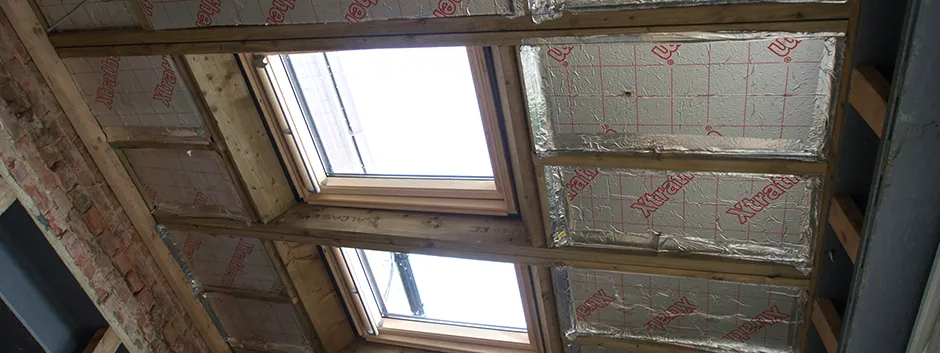
Individual congregations are responsible for maintaining and improving Church of Scotland properties
Individual congregations are responsible for maintaining and improving Church of Scotland properties, acting under the supervision of Presbyteries. They, in turn, report to the General Trustees, who give practical advice and financial aid wherever possible.
All alterations made to buildings must be approved by the General Trustees and a wide range of resources are available to help congregations manage their properties. Congregations considering alterations in their buildings should contact their Presbytery and the General Trustees at the earliest possible stage.
Documents:
- GTs' Application Form for Assistance
- GTs' Application Form for Assistance (Word Version)
- GT Notes for Application Form
This document must be completed for all applications for approvals and funding from the General Trustees and should be submitted to your Presbytery in the first instance.
- HES Application Form
- Grants page for Historic Environment Scotland
Presbytery Building Officers
PBO role and Five-Yearly Surveys
The General Trustees have appointed Presbytery Building Officers to assist Kirk Sessions and Presbyteries with their duties. The Presbytery Buildings Officer works closely alongside Kirk Sessions and congregations, providing advice and guidance on property matters, including repairs, maintenance, and development. The role involves assessing, recording and monitoring the condition of all ecclesiastical buildings within the bounds of each presbytery and helping congregations plan and prioritise fabric repairs and improvements. The Presbytery Building Officer is responsible for the production of survey reports every five years, which are an important tool which can be used to ensure that buildings are maintained in good condition. Further information on the role of the Building Officers and 5-yearly survey reports can be found in this guidance.
Undertaking Works to Buildings
Many of our buildings, particularly churches, are some of the finest in the country. In addition to forming a significant part of the Church of Scotland's spiritual and financial assets, the buildings also form part of our national heritage. As such, it is right and proper that work on buildings is regulated.
Generally, approval is required in some form for all types of work by either the Presbytery or both the Presbytery and the General Trustees. The type of approval required depends on the value of the works and how it will be funded. The process of approvals is defined in The Church of Scotland General Trustees (properties, funds and Endowments) Act 2024. Further information can be found in the guidance. If you are unsure, please contact your Presbytery to seek clarification.
In all instances, an application form should be completed. This should be submitted to Presbytery in the first instance. Additional guidance in relation to the application form is also available.
The Church of Scotland benefits from the exemption of the requirement to obtain Listed Buildings Consent for internal works to buildings that are used as places of worship. The exemption only exists because the Church has in place an adequate system of control, which is regulated by church law.
Ecclesiastical Exemption is granted via the Fabric Committee approvals process.
It should be noted that Ecclesiastical Exemption does NOT cover external alterations to listed places of worship. In addition, it does NOT replace planning consent or the requirement for a building warrant. Planning applications and building warrant applications are dealt with by the local council.
Further general information can be found in the HES document.
It is the responsibility of the Kirk Session to ensure that funding is in place before consultants are instructed, contracts awarded and works start on site. Works can be funded using locally held funds, local donations, funding from the Church of Scotland and funding from external sources.
Most large projects are normally funded using a combination of fund sources.
The General Trustees hold funds in the Consolidated Fabric Fund for the benefit of Congregations. Congregations can apply for grants from the Central Fabric Fund. General information relating to these funds is available in the funding section of the website and further detailed information is available in this document.
Kirk Sessions are encouraged to apply for funding from external sources. Presbytery Building Officers are able to provide further advice.
Further information and links to external funders can be found in the guidance.
Central Fabric Fund Guidance Notes
A general fund from which the Trustees can make available grants or loans to congregations facing fabric expenditure. All applications for assistance must have the support of the Presbytery. There is never enough money in the Central Fabric Fund to meet all the requests for help and the Trustees seek to encourage donations and legacies to the fund.
Most of the monies held by the General Trustees are looked after by them through either the Consolidated Fabric Fund or the Consolidated Stipend Fund. Each of these funds is invested in its entirety, with shares in the funds being allocated to the benefit of particular congregations.
Attestations
In accordance with THE CHURCH OF SCOTLAND GENERAL TRUSTEES (PROPERTIES, FUNDS AND ENDOWMENTS) ACT 2024, each Kirk Session must complete the Property Register and Manse Condition Schedule for each property and submit it to Presbytery on an annual basis. It is then the duty of the Presbytery to review the documents and to instruct the Kirk Session to undertake any necessary repairs and improvements.
Attestations are the key process for ensuring statutory and Health and Safety compliance. The process acts as a risk assessment tool to identify buildings at high risk so that action may be taken to address any concerns. The Property Register and Manse Condition Schedules aim to demonstrate that maintenance recommendations from 5-yearly surveys are being undertaken. In the event of an insurance claim, the documents will also demonstrate compliance with insurance conditions.
Currently, each Presbytery has its own process for attestations. The General Trustees are currently working on the development of an online digital system for future attestations. In the meantime, please contact Presbytery with any queries.
The Property Register and Manse Condition Schedule are available for download using the following links
Better Heating Scheme
Under the Better Heating Scheme, which is administered by the Church of Scotland General Trustees, congregations can obtain, for a modest fee, skilled advice on how to save money on heating bills and improving the standard of comfort in buildings. You can download these guides for more information on this service, including costs, subsidies, and points to note, as well as heating tips for property conveners.
Vesting of Properties
The property titles for churches, halls and manses can either be
- Vested with the General Trustees
- Held locally by the Congregation (in the names of local trustees)
- Or locally held, but contains an Assembly Control clause
The vesting of the title depends on the history of the property and the legal background to ownership. The vesting can have implications in a number of areas, such as the ability to access General Trustee funds and the process for selling buildings. The vesting of a property can be checked by contacting gentrustees@churchofscotland.org.uk
Audio Visual and Sound Systems
Many churches use high-quality sound systems and visual display equipment as part of their regular worship. The General Trustees can provide guidance and arrange for architecture, conservation and AV experts to visit your buildings, free-of-charge, to help you assess the options.