
24 May 2026 - Pentecost – Year A
A downloadable version of this page is available for anyone who would like to save or print it out.
The Faith Action Programme would like to thank Rev Dr Jock Stein, retired minister, for his thoughts on Pentecost.
Introduction
While Pentecost, like all ‘high days' in the Church calendar, lets us celebrate something wonderful that happened in the past, more than any other festival this one challenges us about what is happening now. I can remember serving as a missionary in Kenya when the church was growing so fast that we had to lay on a one-year training course for new ministers. I suggested we include some teaching about the gifts of the Spirit in 1 Corinthians 12 (an alternative reading for today, if you wish) but was firmly told "we're Presbyterian, not Pentecostal!"
For ‘Pentecostal' to mean just a denomination, and not an adjective embraced by all God's people, is unacceptable. And a real question for any worship leader is whether our worship allows room for something special to happen visibly – even just making opportunity for people to be prayed with after worship – or whether it is always ‘worship as usual' where people come in, sit, stand, sit and maybe chat about anything and everything over coffee after.
And yet we cannot make Pentecost happen. And if we could, it would reduce it to yet another programme to counter church decline. Pentecost, more than anything else in the calendar, is a God event, or it is nothing.
Numbers 11:24-30
A rich passage, which may or may not tie up with Jethro's advice to delegate authority in Exodus 18. The context of this passage is the impending gift of food, and the import of these particular verses is the generosity of God in giving his Spirit, underlined in several ways:
- Moses is no longer the only person filled with the light and Spirit of God – this is seen visibly as the seventy elders prophesy, v25 – in this context, likely to be ecstatic speech though that would not describe prophecy in general in the Bible, nor prophecy today.
- Prophetic speech is not limited to the holy place (‘the tent'), but takes place in the camp, and Moses has to tell Joshua, who wants things decent and in order, that this freedom is OK.
- Moses then expresses his wish that this gift of the Spirit would be for everyone, not just leaders.
‘They did not do so again', v2,5 implies that on this occasion the giving of the Spirit was to signal the leadership of the seventy more than the imparting of some spiritual gift. This would tie up with New Testament experience of ‘three Pentecosts' (for Jews in Acts 2, for Samaritans in Acts 8 and for Gentiles in Acts 10), where in each case the Spirit is given as a sign of inclusion, a sign of the extension of God's kingdom, a sign that we only have repeated in that form once, when Paul meets followers of John the Baptist in Ephesus (Acts 19) – although the use of tongues as a spiritual gift for individuals is certainly encouraged by Paul, and the practice of ‘spiritual gifts' continues in the early years of the Christian Church.
Psalm 104:24-34, 35b
This psalm has more hymns indexed to it in CH4 than any other psalm except 103 - which has one or two more. But few of these mention the Spirit. This is because the reference to the Spirit of God in Psalm 104 is to the breath of God in creating and sustaining all things, whereas our other readings for today reference the Spirit coming as a special gift. There are not of course two versions of the Holy Spirit, but this reminds us that God in freedom and love acts in different ways: God is present everywhere, and God is present in particular places, particular times, particular people.

All this has so much to teach us. The Spirit is present in all the arts, and in ‘honest toil' – traditionally described as ‘common grace'. We make common cause with people of all religions and none in seeking human flourishing and an end to what is wrong, looking for the guidance of God's Spirit in these things. But this is not in conflict with what traditionally has been called ‘special grace', how we come to God through Jesus Christ and in his Spirit, how we worship the Lord who is revealed as triune, with the Spirit engaged in a continual reel of three, illustrated by the celtic triangle design, a God who is not a solo performer but a God in relationship ‘inside', as well as desiring relations with us ‘outside'
You'll notice that the Lectionary ‘sanitises' the reading by missing out verse 35a, which some judge to clash with the final command to praise the Lord. You may or may not agree with this approach! If you choose to include the whole verse, you could point out that the Psalms are given us to allow us to express our emotions, which are better and more safely expressed in worship than left to be projected outwards in hate or inwards in despair. And – however it may finally happen – we do want to see a new universe where sin and evil are no more.
Acts 2:1-21
If exciting, this is still a long passage which could be shortened or read over two Sundays. Pentecost, an early harvest festival which Jews held on the fiftieth day after Passover, celebrated both the end of the wheat harvest and the giving of the law, a natural gift and a spiritual gift. Now comes something new, although Peter is able to relate it clearly to Old Testament prophecy.
The following motifs, at least, are present in the text:
- Wind and fire as signs of God's presence (contrast 1 Kings 19:11-12), with visible effects on people (whom some think are drunk, v13)
- The sign is for all: men and women are touched by God (implied by vv1 and 18), it is for young and old
- Tongues as praise and testimony in other languages (contrast ‘tongues' in 1 Corinthians 14:2)
- While only Jews are present, v5, it is a sign in every language, therefore for all people. And the prophecy, v17, is for all peoples
- This kind of God-work is controversial, it brings division, vv 12-13
- The dramatic signs are explained, and explained from Jewish Scriptures – act and word together
Overall, Pentecost is now a sign that ‘the last days' have come, v17, which may help us understand all the ‘apocalyptic' passages in the Bible. For example, the book of Revelation, with its dramatic cinematic sequences of seven this and seven that, can be read as a warning that things will come to a climax before the end of ‘history' as we know it. But Acts 2 tells us that we are already in ‘the last days', however long that may be as humans measure time.
If you are into theological jargon, this is why ‘Reformed' Christians have generally been ‘amillennial' rather than ‘pre' or ‘postmillennial' – you can ‘google' the words.
John 7:37-39
The Feast of Tabernacles marked the final autumn harvest but was also seen as a foretaste of the final harvest bringing in the age to come. Each day water would be drawn from the pool of Siloam and carried up to the temple, and at night the temple would be a blaze of light. When Jesus used stories such as the wheat and the weeds growing together until harvest time, He was picking up on Jewish expectation that when Messiah came, He would be God's harvester.
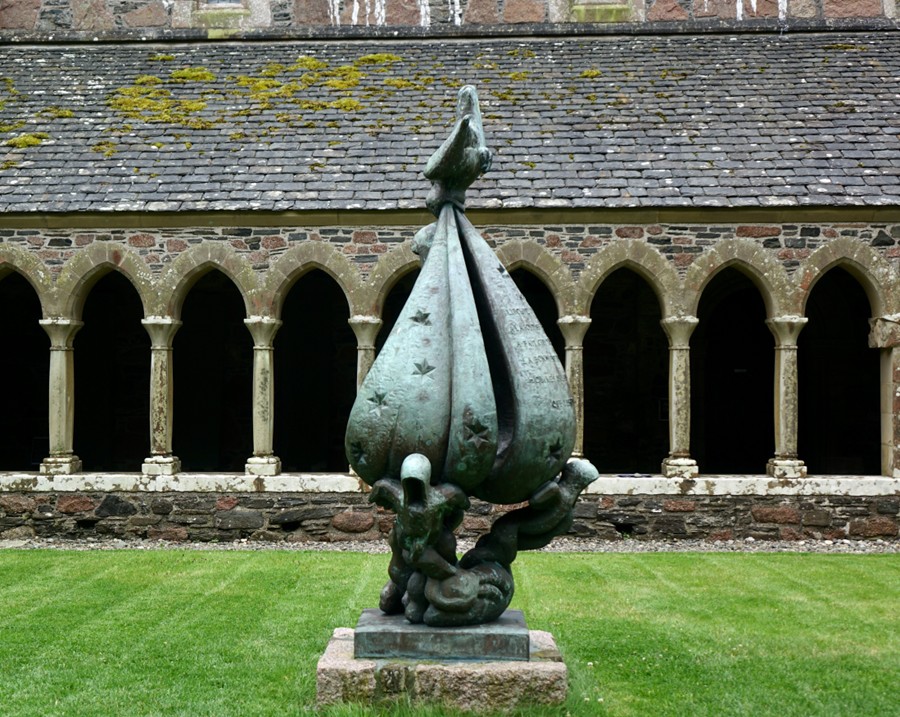
Earlier in the chapter we are told that Jesus delayed coming up to the feast until half way through the week. He sits in the temple and teaches, the crowd are wondering if He is the long expected Messiah, the temple police are sent to arrest Jesus, but fail. Each day water has been drawn, for the temple. While some may have remembered how Moses struck the rock from which water poured out (Exodus 17:6), and others may have thought of the promise in Ezekiel 47 of water flowing from the temple to bless the thirsty world around, the Jewish Talmud tells us that the ‘drawing of water' represents ‘the pouring out of the Holy Spirit' because Isaiah 12:3 says "With joy you will draw water from the wells of salvation." So when Jesus says what He does in our Gospel passage, it was a clear claim to be God's promised Messiah.
His cousin John had prophesied that Jesus would baptize with the Holy Spirit (John 1:33). But the heart of the believer who receives the Spirit does not become a well into which living water is simply absorbed, it becomes a spring out of which the same water will flow to others.
The Lipchitz sculpture ‘Descent of the Spirit' on Iona, while not based on this text at all, actually illustrates it rather well.
"As yet there was no Spirit", v39, is a little puzzling at first, but it simply means that the great pouring out of the Spirit at Pentecost was still to come.
Sermon ideas
The focal themes of Pentecost are fulfilment, surprise, generosity, and ‘for everyone'. Here are a few ways these might be shaped:
- A monologue addressed to Joshua, telling the story of how the Spirit would be given to more and more people – here are three sample section starters: "Did you ever suspect, Joshua, that your name would be taken by a leader greater than Moses?" "Did you realise, Joshua, how dangerous it would be to receive the Spirit, how many prophets would be murdered?" Could you imagine, Joshua, a time when the Spirit would be poured out on Egyptians (add others)?"
- Surprise – for Joshua, for the people at the Festival, for those gathered on the day of Pentecost, for us.
- Take verse 35 of Psalm 104 and show, from Bible and stories of people who have changed, how the Spirit turns hate into love – and of course you could explain how the ‘imprecations' of the Psalms do have their value, and how the Spirit uses surprising thoughts and surprising people.
- If these matters are causing concern (or expectation!) in your congregation, John 7:38 is a great starter for a sermon explaining baptism in water and in the Spirit, why it has caused division, and how people with different experiences are all challenged both to grow themselves and to accept one another.
- A more traditional sermon on Acts 2 – here are three out of many ways of approaching it:
(a) A world on fire (today, and v19); a church on fire (the change in the apostles, and today); a heart on fire (refer to John passage as well as v3).
(b) Worship festivals then and now (v1 and 5); experience then and now (vv2-4, 6-13); explanation then and now (vv14-21).
(c) The languages of earth, the heavenly language of tongues (explain), the language of ‘Bible apocalyptic' (vv17-21) and how it explained Pentecost and inspires us today.
Prayers
I look for a verse from the Psalms to introduce the opening prayer – and if the Lectionary Psalm is not going to be sung or read, this is at least a nod in that direction. Another approach which is now more popular than it used to be, and easy with screens available, is to have part or all of a Psalm as a responsive reading. When it comes to confession, I usually keep this general so that anyone and everyone can feel involved, but Pentecost does offer particular motifs which can be used.
Let me sing to God all my life long, sing hymns to my God as long as I live! (From Ps 104, The Message)
Let us pray.
This is the day when the Spirit arrived.
We shall rejoice and be glad in it!
Holy and wonderful God,
we praise You and exalt Your name.
All over the world, Your people today bless You in a thousand tongues,
and we come to add our cries and our whispers,
and the sighs Your Spirit awakes in our hearts.
You speak to us, God in so many ways -
in song and word and picture;
in cloud and wind and flame;
and in the person of Jesus Christ,
who baptizes with Holy Spirit and with fire.
Forgive us Lord, when we grab the nice images we have of You, kind and gentle,
and forget that Your being is eternal light,
Your love is a holy fire,
and your promise is to make a new world in which evil has no place at all.
Forgive us Lord when we choose the easy road, the quiet life,
and close our eyes to the pain of others,
to the opportunities we have of doing good,
to the great scope of Your purposes.
Draw us in afresh to the friendship of Christ and the power of his Spirit, we pray,
for Your mercy's sake.
And now, gracious God, inhabit our worship by Your Spirit,
that for a while at least we know the life of heaven,
and are inspired to make the life of earth a little more lovely, with Your help.
Glory be to the Father, and to the Son and to the Holy Spirit:
as it was in the beginning, is now and shall be for ever, Amen.
Thanksgiving and intercession are typically led by the minister, or by one or more people appointed from the congregation; dialogue is effective, and spoken or sung responses (eg ‘O Lord hear my prayer') are useful. It is also possible on occasion to break into groups and let them make their own prayers – but if so, especially for the sake of those who hearing is impaired, make sure:
- Group people in 3s or 4
- tell people to keep prayers brief, and that silence is OK.
- give people a minute to turn chairs round (group prayer doesn't usually work with pews).
What follows is fairly brief, with themes which could easily be expanded:
Lord, hear our prayers of thanks for what Your Spirit enables day by day.
The life of creation,
with birds and beasts,
rivers and streams,
bread and wine,
music and art.
O Lord how manifold are Your works – in wisdom You have made them all!
You pay attention to human need,
You hear our praise and our prayer,
You delight in human praise.
You integrate the big picture and the tiny image.
For the marvel of Your being and how You delight to hear us at our level,
we give humble thanks.
O God, on this Pentecost Sunday
we remember how some of those who heard the apostles mocked them,
and how some of Your people today are persecuted.
So we pray for Christians in Iran and North Korea, and many other places of persecution. And we remember all who suffer for doing
what is right,
and pray for groups like Amnesty who plead for the rights of people to speak in freedom, and bodies who support Christians under pressure.
We pray for the renewal of the Church in this land,
and for those in positions of leadership,
in Assembly and Presbytery, in church offices, in this congregation.
We pray for a fresh outpouring of Your Spirit.
We pray for openness to new ways and surprising opportunities.
We pray for dead wood to shoot new growth,
for dead hearts to be brought to life,
for dead places to be open to the gospel.
We open ourselves afresh to the presence and power of Your Holy Spirit .
As we bring You our private prayers,
so too we pray together this common prayer,
Our Father …
A sentence of encouragement or command, followed by a blessing, works well. If you want people to say the grace, it's still good to follow it with a blessing – in my experience there will be a few for whom the blessing is the most important thing (or even the one thing) they take from the service, so do not short-change them. Here is one possible ending for this Sunday:
Go in the power and wisdom of the Spirit
and may the God who brought the universe into being, birth fresh hope within you;
may the Christ who died and rose again, sustain His good purpose for your life;
and may the Holy Spirit surprise and delight you,
now and always.
Amen
Musical suggestions
God Welcomes All (GWA) is the new supplement to Church Hymnary Fourth Edition. This exciting new collection features over 200 hymns and songs in a wide range of styles by writers from Scotland and around the world.
The full music and words-only versions are now available; and digital resources, including the expansion of the existing Church of Scotland music website, will be published in due course, with streaming functions and further information on each song; backing tracks; and lyric videos. God Welcomes All is available to order from https://chbookshop.hymnsam.co.uk/books/9781786225573/god-welcomes-all
Our online music resource is on the Church of Scotland website; you can listen to samples of every song in the Church Hymnary 4th edition (CH4) and download a selection of recordings for use in worship. You will also find playlists for this week and liturgical seasons and themes on the Weekly Worship and Inspire Me tabs.
You can find further musical suggestions for this week in a range of styles on the Songs for Sunday blog from Trinity College Glasgow.
- GWA 127 - "Holy Spirit, living breath of God." - A lesser known Getty and Townend hymn with a good breadth of theology.
- GWA 128 – "As the wind song through the trees." - A lovely devotional hymn by Shirley Erena Murray.
- CH4 147 – "All creatures of our God and King." - While there are many hymns based on our Psalm reading (like 132 and 232), for this special Sunday I just mention this and the next one.
- CH4 137 – "All things bright and beautiful."
- CH4 194 – "This is the day." - Perhaps a more obvious all-age hymn, along with the following one.
- CH4 204 - "I am the church, you are the church"
- CH4 581 – "Hail thee festival day." - If you have a good choir, this is a suitable anthem.
- CH4 582 – "O day of joy and wonder." - Not all hymns make theology and application simple as this one does. I recommend singing it in Eb, so that men enjoy it as well as women.
- CH4 583 – "Spirit divine, attend our prayers." - Another Pentecost hymn, with a great tune rooted in the history of the Kirk which must not be forgotten.
- CH4 584 – "Like fireworks in the night." - A modern hymn set to a familiar tune. The verses reflect the life of the writer who was still inspiring others at the age of 100.
- CH4 589 – "Come, Holy Spirit." - An easy call and response song, with cantor usually singing the first line of each verse, and congregations joining in the simple chorus which follows.
A suggested playlist of songs from CH4 throughout Pentecost can be found on the Church of Scotland website.
Other
If you want a ‘filler' for a printed order of service, I have a poem in the book From Cosmos to Canaan based on the reading from Numbers which you are welcome to use:
In Praise of Shouting Shout about this marvellous God,
have no doubt, just let it out,
throw His fame from East to West,
hurl His name from North to South,
stretch your throat and roar a note
of godly glee as antidote
to shushing, creeping, blushing, sleeping.
Let the Spirit take you over,
don't be shy, you will recover,
raise your hands and gaze at heaven
amaze yourself, you'll be forgiven,
call on Facebook all your fans,
amplify a thousand bands
with trumpets outing grumpets doubting.
Make it raucous, keep in focus,
open throttle, hold your bottle,
God deserves your best typhoon
when the Spirit storms at noon.
Reflecting on our worship practice
Since the start of the pandemic in 2020, the way we worship has changed and we need to reflect on the changing or newly established patterns that emerged and continue to emerge as a result of the disruption.
We can facilitate worship for all by exploring imaginative approaches to inclusion, participation and our use of technologies in ways that suit our contexts. This is not an exhaustive list, but some things we could consider are:
- Framing various parts of the worship service in accessible language to help worshippers understand the character and purpose of each part. This is essential for creating worship for all (intergenerational worship) that reflects your community of faith.
- Holding spaces for reflection and encouraging prayer to be articulated in verbal and non-verbal ways, individually and in online breakout rooms.
- In online formats the effective use of the chat function and microphone settings encourages active participation in prayer, e.g. saying the Lord's Prayer together unmuted, in a moment of ‘holy chaos'.
- While singing in our congregations is still restricted, we can worship corporately by using antiphonal psalm readings, creeds and participative prayers.
- Using music and the arts as part of the worship encourages the use of imagination in place of sung or spoken words.
- Use of silence, sensory and kinaesthetic practices allow for experience and expression beyond regular audio and visual mediums.
The following questions might help you develop a habit of reflecting on how we create and deliver content and its effectiveness and impact, and then applying what we learn to develop our practice.
- How inclusive was the worship?
Could the worship delivery and content be described as worship for all/ intergenerational?
Was it sensitive to different "Spiritual Styles"? - How was the balance between passive and active participation?
- How were people empowered to connect with or encounter God?
What helped this?
What hindered this? - How cohesive was the worship?
Did it function well as a whole?
How effective was each of the individual elements in fulfilling its purpose? - How balanced was the worship?
What themes/topics/doctrines/areas of Christian life were included? - How did the worship connect with your context/contemporary issues?
Was it relevant in the everyday lives of those attending and in the wider parish/ community?
How well did the worship connect with local and national issues?
How well did the worship connect with world events/issues? - What have I learned that can help me next time I plan and deliver worship?
Useful links
You can listen to samples of every song in the Church Hymnary 4th edition (CH4) and download a selection of recordings for use in worship in our online hymnary.
You are free to download, project, print and circulate multiple copies of any of this material for use in worship services, bible studies, parish magazines, etc., but reproduction for commercial purposes is not permitted.
Please note that the views expressed in these materials are those of the individual writer and not necessarily the official view of the Church of Scotland, which can be laid down only by the General Assembly.