
Guide to church compliance

Church buildings and activities normally associated with a place of worship are generally classed as low-risk in terms of health and safety. However, this depends on how well buildings have been maintained, as well as awareness and understanding of any risks with the potential to cause injury or harm to anyone working or undertaking activities in church buildings or property.
Additional health and safety considerations must be made for the inherent hazards often found in historic churches and listed buildings. Ageing stonework, plasterwork, historic stairways, access points at height and age-weakened or damaged structural wood are among the issues that have led to some serious injuries and incidents within church buildings. The Charity Trustees should ensure that risk assessments consider these types of hazards and ensure that they are appropriately controlled and managed within their buildings (please see the section on common church hazards below for further advice and guidance).
To introduce or develop congregational arrangements for health and safety, the Charity Trustees must consider two important statutory factors of the Health and Safety at Work Act 1974:
- Suitable provisions must be in place for health and safety, with clearly defined roles and responsibilities for the management of health and safety at the church. This should consider any recruitment, training and provisions required for the delivery of the health and safety initiatives.
- It is important to develop and implement a health and safety policy that demonstrates the congregation's commitment to health and safety and how health and safety arrangements will be implemented at your church and associated buildings. The health and safety policy should make suitable provisions for health and safety and provide the foundations for a health and safety management system that reflects the buildings used and activities carried out by individual congregations.
Common church hazards and risks
Although churches and the activities that take place in them are generally considered to be low risk, there are some hazards associated with them:
- Working at heights
- Asbestos
- Fire
- Hazardous activities that may be associated with community-led enterprises, activities and church-led initiatives such as woodworking classes, childcare facilities, sports and recreation
- Biohazards such as moulds, human and animal waste and bacteria’s and viruses
These must all be considered when carrying out risk assessments for your church buildings. Equipment, materials and tools associated with some activities might have safety implications for fire and people in the building and should be carefully considered.
If you need further advice and guidance on managing safety or carrying out appropriate risk assessments, please contact presbytery or the General Trustees Health and Safety team.
Competent person
The Management of Health and Safety at Work Regulations 1999 require that employers appoint one or more competent persons to help them meet their legal duties for health, safety and welfare of employees. The HSE describes competence as a person's combined training, skills, experience and knowledge and their ability to perform a task safely. Other factors, such as attitude and physical ability, can also affect someone's competence.
The requirement to appoint a competent person does not mean you must recruit outside help. We believe that the best person to advise on congregational health and safety matters is a member of the congregation with knowledge and understanding of the relatively low-risk activities undertaken within church properties.
We are confident that the Congregational Health and Safety Administrator can fulfil the role as the competent person. The health and safety toolkit has been designed to provide step-by-step specific guidance for achieving competency and compliance. Information contained within this toolkit will help the Congregational Health and Safety Administrator identify and control risks within their properties as well as building confidence and competence to undertake their role effectively. The role holder must also be willing to undertake any additional induction and competency-based training modules offered by their congregation, presbytery or the General Trustees to further enhance competency and confidence whilst they fulfil the role.
Developing a congregational health and safety policy
The Health and Safety at Work Act 1974 requires all employers to prepare a health and safety policy. As we recommend a single-system approach to health and safety, all Charity Trustees should ensure that they have a written health and safety policy.
The Health and Safety at Work Act 1974 does not identify exactly what should be contained within a health and safety policy. However, the policy should refer to three main areas:
- The statement of intent – This should provide a statement of overall congregational commitment to good standards of health and safety and usually includes a reference to compliance with relevant legislation. Whilst the Health and Safety at Work Act 1974 only requires the policy to relate to employees, reference should also be made to others who might be affected by relevant activities. For example: contractors, visitors and volunteers. Congregational commitment to health and safety can be demonstrated by having the Session Clerk and/or other members of the Charity Trustees sign the policy.
- Organisation – It is important that the roles and responsibilities of the Charity Trustees and the Congregational Health and Safety Administrator are clearly described within any health and safety policy. If any health and safety responsibilities are delegated to others, this information should also be included.
- Arrangements – Describe how the health and safety policy will be implemented within a congregation and how employees, volunteers, visitors, and anyone else who might be affected by any relevant activities will come to know about it.
The health and safety policy is an important document that demonstrates your commitment to health and safety to your employees and volunteers and details the arrangements made to ensure effective management of health and safety at your church buildings. A copy should be displayed in an area where people can see it. The Charity Trustees must also make sure that they bring the health and safety policy to the attention of all employees/volunteers and that they read and understand the policy.
The health and safety policy must be reviewed at least annually to ensure that the content is up to date and that the roles and responsibilities of the office bearers have not changed. The health and safety policy should also be reviewed when:
- New office bearers are appointed, or there is a change to congregational governance arrangements
- New activities and tasks are undertaken within church properties
- New equipment is purchased
- A serious accident or near-miss incident takes place
- There is a significant change to the outcomes of any risk assessment
- Young people, disabled people, or people whose first language is not English are employed or volunteer
- There is a change in the law.
Fire safety risk assessment (FRSA)
The Charity Trustees must undertake a suitable and sufficient fire safety risk assessment and act on any identified hazards and risks. This includes implementing written Emergency Fire Evacuation Procedures and Arrangements which consider all ability access and evacuation for disabled and wheelchaired building users, fire drills, and, where appropriate, an itinerary and salvage plans for historic or valuable church assets. More information about the FRSA is provided in our section on fire safety.
Health and Safety Law at Work poster

The Health and Safety Information for Employees Regulations 1989 require that all employers display an approved Health and Safety Law at Work poster. A separate poster must be displayed in each property. It is important that the correct version of the poster is displayed prominently within church properties and that the blank spaces have been filled in.
If the approved Law at Work poster is not purchased, it is possible to purchase leaflets that contain the same information. These must be provided to all employees. We also recommend purchasing enough leaflets for all volunteers. Further information can be found on the Health and Safety Executive website.
Principles of congregational health and safety
All Charity Trustees must fulfil certain obligations to protect the health, safety, and welfare of their employees and volunteers. Many of these obligations also extend to protecting members of the public, visitors, contractors and anyone else who might be harmed when accessing the church buildings and property. For example, if any buildings are let to other organisations or groups, it is necessary to ensure that the condition of the buildings and any equipment provided are safe and suitable for use.
The Health and Safety at Work Act 1974 requires employers and duty holders to:
- Ensure, so far as is reasonably practicable, the health, safety, and welfare at work of all their employees, volunteers, visitors and general public
- Provide and maintain plans and systems of work that are safe and without risks to health
- Ensure that employees, volunteers, contractors and the general public can use, handle, store, and transport articles and substances safely and without avoidable risk
- Provide information, instruction, training, supervision and identified safety provisions to protect the health and safety of employees and volunteers
- Provide employees, visitors and general public with safe access and egress to their premises and place of work without any risk to health or safety
- Provide and maintain a safe working environment which does not present a risk to health and have adequate facilities and arrangements in place for employees’ and volunteers’ welfare at work.
Charity Trustees must further ensure that the buildings remain safe and that all work and activities that are carried out at the church buildings do not pose a risk to the health and safety of employees/volunteers or anyone who may access the building or associated property. This is very important, as churches are places of worship and therefore openly accessible to members of the general public.
Employees, volunteers, contractors and the general public also have specific responsibilities under the Health and Safety at Work Act 1974. They must all take reasonable care of their own health and safety and that of others who may be potentially affected by their actions or omissions. Employees, volunteers, contractors and the general public must also cooperate with the Health and Safety measures taken to ensure everyone remains safe.
Although the Health and Safety at Work Act 1974 is the principal overarching legislation relevant to health and safety in the UK, congregations must also be aware of a number of other regulations to ensure the health, safety and welfare of employees and those who use their buildings. These regulations will be explored in more detail in later sections of this toolkit.
Risk Assessments (general)
The risk assessment process is a statutory obligation covered under the Management of Health and Safety at Work Regulations 1999 (MHSWR 1999).
Risk assessments carried out must be suitable and sufficient and recorded in paper or data format. They should be stored within the church along with any other health and safety records in a place where they can be accessed by the authorised staff and provided to any requesting local authority or HSE officer.
More information is available in our risk assessment section.
Roles and responsibilities of the Charity Trustees
Members of the Charity Trustees are responsible for ensuring that all premises under their control, whether or not they are workplaces, are kept as safe as reasonably practicable. They are also responsible for ensuring that no person using or entering the Church buildings are exposed to avoidable hazards and risks that could cause them harm.

We recommend that, for practical and administrative purposes, a health and safety person(s) should be appointed by the Charity Trustees where the role cannot be fulfilled by a trustee member. The post holder will be responsible for the delivery of the local Health and Safety initiatives and administration of the health and safety at your church. This will undoubtedly include close collaboration with others to ensure that risk assessments are reflective of the roles and activities taking place at the church and that any building safety reports or identified risks are immediately brought to the attention of the Charity Trustees. In larger congregations the Charity Trustees may decide to appoint more than one person to ensure that volunteers can suitably manage the deliverables of the role.
The Health and Safety administrator role should involve:
- Being the recognised person for health and safety matters within the congregation
- Promoting safe working practices by providing information on health and safety to employees, volunteers, members of the public and anyone else who might use church properties
- Working with the Congregational Property Convenor, Presbytery Property Convenor, and Presbytery Health and Safety Coordinator to ensure that all health and safety issues are addressed appropriately
- Coordinating the completion and maintenance of the health and safety records, including risk assessments, utility services inspection records, accident records, food safety and hygiene records and training records
- Liaising with individuals and organisations responsible for lets and hires to ensure that health and safety has been considered for the activities undertaken in church property and that congregational health and safety policies are followed
- Reporting to every meeting of the Charity Trustees on health and safety matters so that they are assured that there is a suitable system for health and safety in place
- Seeking advice, help, and support from the General Trustees and presbytery health and safety teams when required to ensure that the role of Congregational Health and Safety Administrator is fulfilled to the best of their abilities.
The Charity Trustees should consider any hazards identified and suitably agree on any mitigations and control methods identified to immediately reduce the risks.
It is recommended that health and safety should be a permanent agenda item for the Charity Trustee meetings and any highlighted health and safety concerns should be fully considered during meetings with a collaborative approach to any mitigations or control measures to be actioned. Inviting the health and safety person to the scheduled meetings is considered good practice to ensure collaboration and an overall agreed approach to the hazards and risks identified.
Scheduled maintenance and safety inspections
More information is available in the Utilities section.
Electrical safety
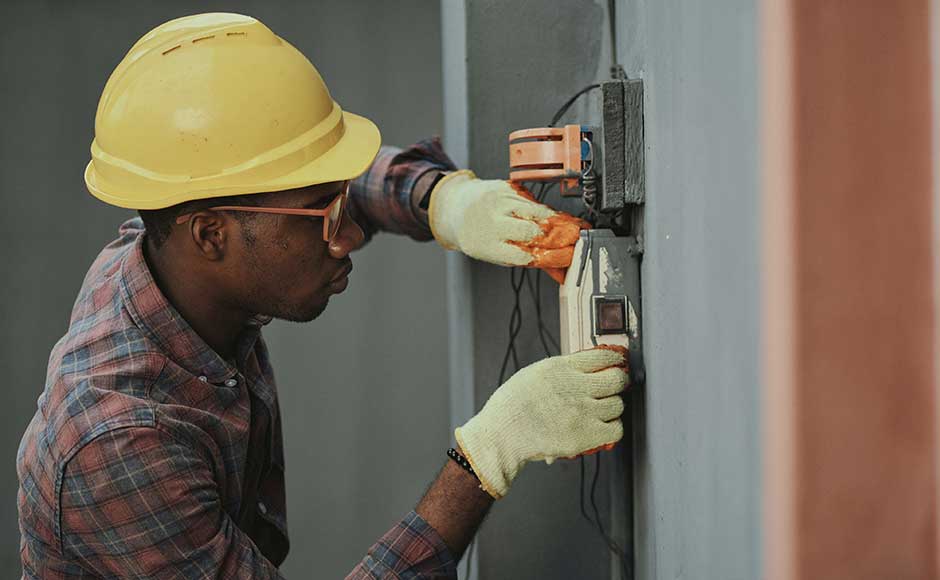
The Charity Trustees must ensure that the 5-yearly electrical testing and safety certification is up to date and carried out by a competent electrical engineer. COSIS insurance and the General Trustees recommend that they belong to member bodies such as SELECT or NIC/EIC to ensure demonstratable fire safety and electrical safety standards.
Gas safety
Gas safety inspections must be scheduled annually and must not be confused with servicing and maintenance. They must be carried out by a competent Gas Safe engineer.
It may be prudent to schedule gas safety inspections in line with the annual servicing schedules. A gas safety certificate should be obtained for each building, including the manse property.
Oil-fired boilers
Oil-fired boilers must be serviced periodically in accordance with the manufacturer’s instructions. There is still a risk of carbon monoxide poisoning and the flues and pipework should be suitably maintained and serviced to ensure safety. All work done on oil boilers, from installation to maintenance to repairs, must be done by an Oil Firing Technical Association (OFTEC)-registered technician.
Water safety
Lead pipework and storage tanks

To which properties does health and safety legislation apply?

The Health and Safety at Work Act 1974 applies to all places where members of the congregation work or visit. Churches and places of worship are generally regarded as public places and also places of work because organists, church officers, cleaners and volunteers work there. A church hall may also be considered a workplace if, for example, the church officer, volunteer or cleaner also carries out work there. There is also a duty for any church-led or third-party activities taking place within the church and associated buildings and grounds.
Manses should not generally be regarded as places of work as they are considered residences for ministers and their families. However, parts of the manse are also equally regarded as a place of work where the minister is expected to receive people, hold meetings and operate a working office and administer their duties. The health and safety of the manse property should be considered by the Charity Trustees as the manse is an associated church building. The ministers and their families or any private tenants must be kept as safe as is reasonably practicable. Any health and safety concerns raised with the Charity Trustees by the minister or other tenants should be appropriately investigated and managed in line with the manse condition schedules recommendations.
Who is responsible for congregational health and safety?
Under civil law, the Charity Trustees of a congregation are collectively responsible for ensuring that there are adequate provisions in place for health and safety. This means that if a concern regarding health and safety is raised with the General Trustees, local authority or the HSE, all Charity Trustees are accountable. This should not lead to personal liability unless a trustee acts in a grossly negligent (or criminal) manner. This should never be found to be the case, particularly where trustees have followed the guidance contained in this Toolkit.
The Charity Trustees of a congregation are the minister and elders who form the Kirk Session, as well as the members of the Financial Board (if there is a separate one), which may also be known as the Congregational Board, Deacons’ Court or Committee of Management, depending on the constitution of the congregation. For ease, we will refer to the congregational governing body as the Charity Trustees throughout this toolkit. This includes the Kirk Session, for congregations operating under the Unitary Constitution.
In terms of Church law, the Unitary Constitution places on the Kirk Session the responsibility for discharging all duties imposed by health and safety and other civil law legislation relating to congregational properties. Whilst there is no equivalent (explicit) provision for health and safety duties in the Model Deed of Constitution, it requires the Financial Board to set up a Fabric Committee to take care of congregational buildings. By extension, responsibility for these duties within congregations operating under the Model Deed also ultimately lies with the Charity Trustees.
Working with employees and volunteers
Employees are individuals who are employed by congregations to undertake specific duties for payment. Volunteers may undertake the same duties of employees; however, they will not be under contract or be paid for their work.

The health and safety role, in many cases, is a secondary or part-time responsibility of the volunteers. This can lead to a disproportionate allocation of time dedicated by the volunteers to carry out both the health and safety and their other volunteer roles effectively. We strongly recommend that any volunteers tasked with health and safety have a volunteer agreement which allows them to suitably manage the part-time responsibilities of each of the agreed roles to ensure that sufficient time can be allocated to carry out the tasks and responsibilities of each position filled.
The minister is not regarded as an employee of the congregation. However, cleaners, organists, administrators, development workers etc. may be classed as employees.
Health and safety legislation now applies to employees and volunteers and they are suitably afforded equal rights and should be included in any policies and procedures. If at least one person is employed or carrying out voluntary duties, congregations are expected to comply with all relevant legislation.
The Health and Safety Executive (HSE) has updated guidance to help organisations that work with volunteers to comply with health and safety legislation. We recommend that congregations implement a single-system approach to health and safety, which means no differentiation between employees and volunteers. This will ensure that everyone who works, volunteers or visits church properties is protected under the same health and safety policies and procedures. Progress through this toolkit will enable these to be developed. Please refer to the HSE guidance on Volunteers.