
General Assembly to consider proposal to select lead academic partner for ministry training
Published on 6 January 2026 4 minutes read
The Church of Scotland is proposing to choose Trinity College at the University of Glasgow as its primary academic partner to train national Ministers of Word and Sacrament and Deacons.

The recommendation is based on the findings of a General Assembly-backed review to select one training centre to take the leading role to ensure training for Ministers of Word and Sacrament and Deacons is developed within a larger, unified, candidate learning cohort, with a core curriculum more strongly focused on transformational learning for the vocation of ministry, and with placements which integrate learning and practice with theological reflection at their core.
This proceeds directly from work which brought the Formation Framework in 2019 and is linked with a longstanding trajectory to renew and revitalise ministry training which goes back to 1993.
It is proposed that the new Initial Ministerial Education programme will begin in September 2027 and will be delivered both 'in person' and via online distance learning.
This will bring national coverage without the need for candidates to relocate.
Three other universities - New College (University of Edinburgh), Christ College (University of Aberdeen) and Highland Theological College (University of Highlands and Islands) will continue to be responsible for training Ordained Local Ministers, Readers, and apprentices through online distance learning, as well as providing public-access training for the wider Church.
Candidates for national ministry of word and sacrament and the diaconate who are presently studying at those locations will complete their training there without re-location.
St Mary's College (University of St Andrews) decided not to make a submission to become Lead Academic Partner and does not at present train any candidates for the ministries of the Church of Scotland.
The decision to propose a Lead Academic Partner, delayed due to the COVID-19 pandemic, focused primarily on the formation of ministers and not on budget savings.
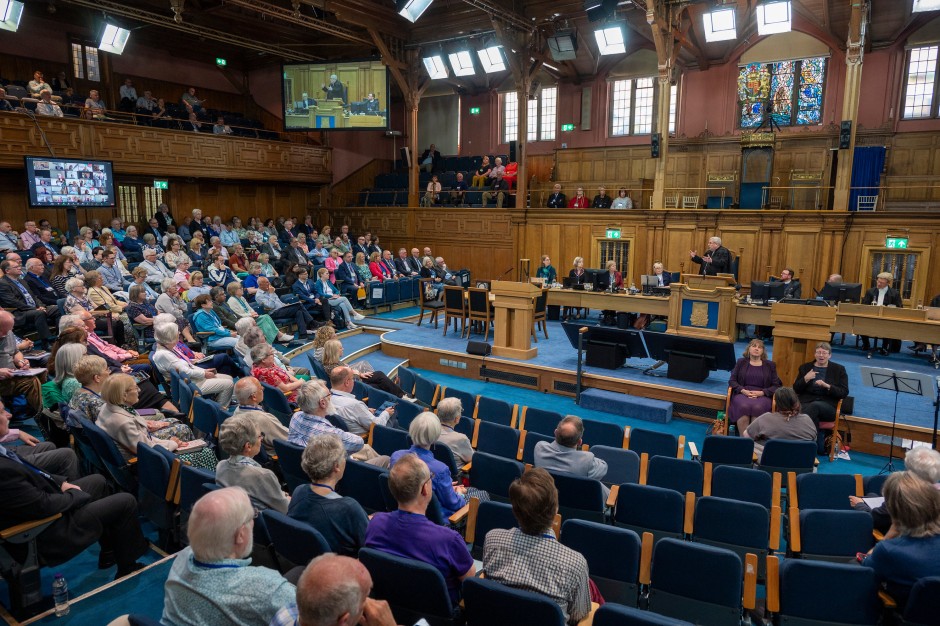
It is the next step in a long-term project to re-shape ministry training so as to form ministers and deacons in a dynamic way that will fit them well for ministry in the present day.
Following a rigorous process and consideration over many years, a Selection Panel judged that Trinity College's ‘vision, courage, imagination, and strategic coherence set its bid apart – a forward-looking response to the current challenges and opportunities facing the Church.
The recommendation is subject to Trinity College working with church leaders to agree on terms and develop an academic training package, and a final decision will be taken by the General Assembly in May 2026.
There are currently just under 80 people in the training process at present to become full-time Ministers of Word and Sacrament, Ordained Local Ministers, Deacons and Readers.
The number who enter ministry from each partner varies from year to year.
Missional calling
Rev Dr Sandy Forsyth, the Church of Scotland's Director of Studies for Ministry, said: "All four academic centres presented high-quality proposals for taking the lead role.
"It was only after a rigorous process, implemented by the Selection Panel appointed by the Church, that Trinity College at Glasgow University were recommended by the Panel as their agreed choice to work in partnership with the Church to develop and implement the new programme for the training of ministers and deacons which will begin in September 2027.
"The proposals were scored individually by the panel members on the basis of a wide range of criteria, which focused primarily on a vision for the nurture and formation of ministers and deacons in their vocation, to enhance and fulfil what is an apostolic and missional calling.
"The criteria also included a practical focus on the deliverability of each submission from the academic providers in their approach to the curriculum and integrated, assessed training placements; as well as such important aspects as the capacity to offer hybrid training that would allow for both in person' and online distance learning.
"In all, 22 criteria were considered that looked at every aspect of vision, purpose, ethos and training delivery.
"After the proposals of each academic provider were evaluated by the panel, in their judgement Trinity College scored highest under the criteria, and also offered a bold, innovative and reforming vision of ministry training that aligns best with the Church's future training needs and its missional calling in the context of a rapidly changing world and society, considering also the realities and challenges of ministry on the ground now."
Valued and trusted partners
Dr Forsyth said the Church's People and Training team will now work "enthusiastically" with Trinity College to develop a Memorandum of Understanding that will lay out the duties and responsibilities of each party.
They will also seek to agree the respective inputs of Trinity College and the Church to the education and broader formation of ministers in the future and their likely costs.
"Subject to the prior approval of the Church's Faith Action Programme Leadership Team, the recommendation of the Panel and these further proposals will then be taken to the 2026 General Assembly which will make the final decision," added Dr Forsyth.
"Our other academic providers remain valued and trusted partners who contribute significantly to training across the Church, and it is our sincere hope that the Church's relationship with them will continue."
Heritage
The University of Glasgow has trained ministers since 1560 and around 40% of Church of Scotland ministers over the past 50 years have studied there.
Trinity College was originally founded in the 19th century.
Rev Dr Doug Gay, Principal of Trinity College and Senior Lecturer in Practical Theology at the University of Glasgow, said: "Glasgow has a long and proud tradition of training ministers stretching back to the Reformation and we are honoured to see that legacy continue into the 21st century.
"This recommendation recognises the strength of our work in practical theology and ministerial formation and we look forward to building on that heritage in partnership with the Church."