
Ecumenical relations - relations with other Churches
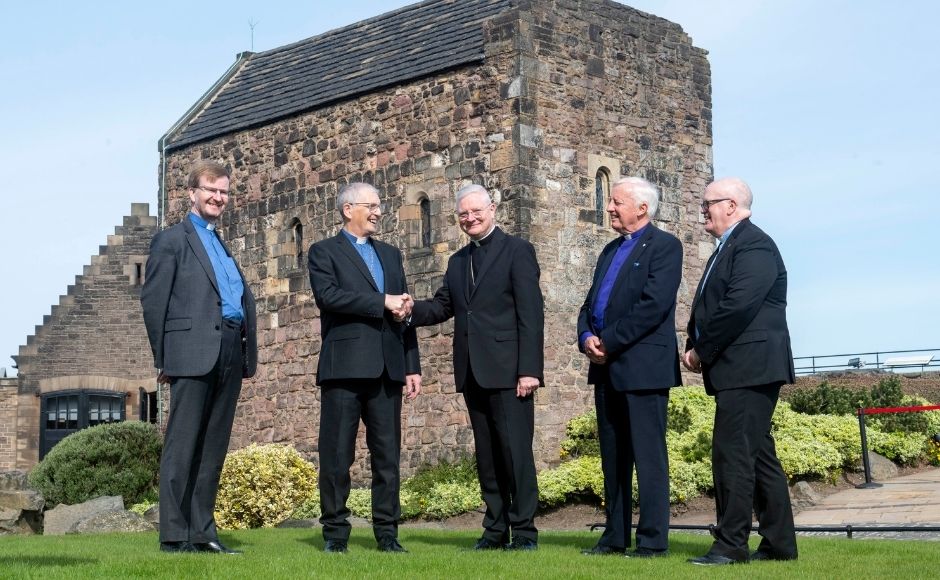
Ecumenism is the principle or aim of promoting unity among the world's Christian Churches.
The Church of Scotland believes that God calls us to celebrate and unite with other Christian denominations, both in Scotland and throughout the world. We therefore work ecumenically, wherever possible, engaging with other churches in a variety of ways at local, national, and international levels.
The Ecumenical Relations Committee is responsible for encouraging and enabling an ecumenical vision within the Church of Scotland.
Explore our resources section for information on ecumenical study grants, ecumenical baptisms, the joint study group between the Church of Scotland and the Church of England, and more.
The Ecumenical Policy of the Church of Scotland
The Ecumenical Policy of the Church, agreed in 2018, commits the Church to encouraging churches at local, regional, national and international levels to act together. This Policy applies except in cases where deep differences of conviction between churches compel them to act separately.
Read the Theological Basis of the Policy to learn more about its potential implications and to understand the theology behind the Policy.
Ecumenical strategy
The Ecumenical Relations Committee presented its local, national and international ecumenical strategy to the 2019 General Assembly. The strategy laid out the Committee's commitment to:
- Make engagement with the renewed presbyteries of the Church an integral part of its ongoing work
- Make the dissemination of initiatives and resources in relation to discipleship, mission and cooperative working an integral part of its ongoing work
- Establish and deepen ongoing links with Churches Together groups
- Promote effective models of local ecumenical partnership
- Encourage the Church to participate in prayer through the Week of Prayer for Christian Unity, Thy Kingdome Come, and other initiatives as appropriate
- Offer liturgies for the celebration of our shared life as the people of God across different traditions of the life of the Church
- Encourage congregations and presbyteries to explore and enhance what they may do in cooperative partnership with churches of different traditions
- Establish and participate in a Scottish Christian Forum, in cooperative partnership with churches of other traditions
- Engage with churches of other traditions, including those with whom we do not have an established relationship
- Continuously review the effectiveness of the ecumenical bodies in which the Church participates
- Maintain our active participation in Churches Together in England, Churches Together in Britain and Ireland, the Conference of European Churches, The Community of Protestant Churches in Europe, the World Communion of Reformed Churches, and the World Council of Churches.
St Margaret Declaration
The 2022 General Assembly welcomed a historic Declaration of Friendship with the Catholic Church in Scotland. The declaration offers ‘a decisive and irrevocable statement of our friendship with one another, based on our shared faith in Christ.' It was written by senior figures from both Churches and was also approved by the Bishops Conference of the Catholic Church in Scotland.
The full text of the declaration is available to read online. A video of Archbishop Leo Cushley speaking about the Declaration at the 2022 General Assembly is available below.
The St Andrew Declaration
St Andrew's Day 2021 (30 November) was marked by a signing of a joint Declaration between the Church of Scotland and the Scottish Episcopal Church during a special service at St Mary's Episcopal Cathedral. The Declaration was endorsed by Lord Wallace, Moderator of the General Assembly of the Church of Scotland, and Most Rev Mark Strange, the Primus of the Scottish Episcopal Church.
The St Andrew Declaration outlines a series of acknowledgements and commitments between the churches which are intended to deepen our relationship and look at new ways of working together to serve the people of Scotland. Both the General Assembly of the Church of Scotland and the General Synod of the Scottish Episcopal Church voted to welcome the agreement.
The full service is available for view on our YouTube channel.
The full text of the Declaration is available to download.
The Columba Declaration and our relationship with the Church of England
In 2016 the Church of Scotland and the Church of England signed a joint declaration in which the two churches agreed that they shared a common calling that has enabled a growth in communion and partnership in mission. The Columba Declaration was signed by Rt Rev Dr Russell Barr, Moderator of the General Assembly of the Church of Scotland, and Most Revd and Rt Hon Justin Welby, Archbishop of Canterbury.
The Declaration acknowledged both churches as belonging to the One, Holy Catholic and Apostolic Church of Jesus Christ and truly participating in the apostolic ministry and mission of the whole people of God. Both churches recognised their common practices and beliefs and committed to grow together and support one another through:
- Prayer
- Welcoming each other's members to worship
- Exploring opportunities for congregational partnership
- Enabling ordained ministers from each other's churches to exercise ministry in the other church, in accordance with the discipline of each church
- Identifying theological issues that arise from growth towards fuller communion and being prepared to allocate resources to addressing them
- Working together on social, political and ethical issues that arise from their participation in public life and allocating resources to joint initiatives for addressing them.
Joint study group - Church of England and Church of Scotland
The Church of England and the Church of Scotland have a joint study group which has produced two reports: Growth in Communion, Partnership in Mission and Our Fellowship in the Gospel.
Our Global Family
The Church of Scotland works with a number of partners and churches throughout Scotland and across the world and is a member of the following Ecumenical Bodies.
- Action of Churches Together in Scotland (ACTS)
- Churches Together in Britain and Ireland (CTBI)
- Churches Together in England (CTE)
- Conference of European Churches (CEC)
- Community of Protestant Churches in Europe (CPCE)
- World Communion of Reformed Churches (WCRC)
- World Council of Churches (WCC)