
January 2026: Rev Sandra Black
The Church of Scotland's Talking Ministry monthly series shares personal stories from those serving in Christian ministry, along with resources filled with questions, prayers and reflections to help encourage reflection on how God might be calling you at this time
In the first instalment of 2026, Rev Sandra Black talks about her career as a chaplain, and parish and interim minister.
My Ministry: Rev Sandra Black
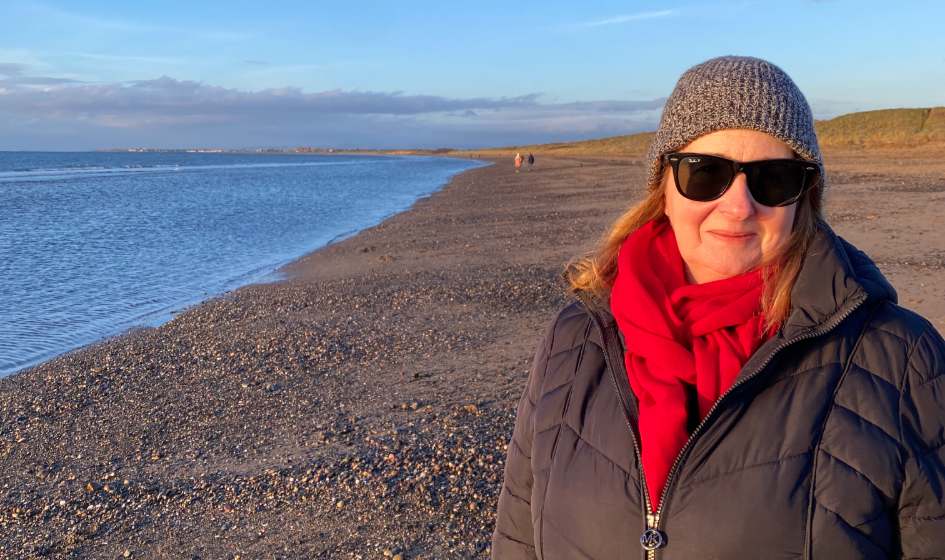
Currently working in a support role with the Church of Scotland interim and transition support team, Rev Sandra Black previously served in parish ministry, chaplaincy and by providing support to congregations facing various challenges as an interim minister. Her husband David is also a minister, currently serving at Pollokshields Parish Church in Glasgow, and the couple have one adult daughter.
When did you become a Christian?
I only had a little contact with church growing up in Whitburn in West Lothian. I was sent to Sunday school, but when I became a teenager, I fell away from church because it didn't really mean a lot to me at that time. It was really when I went to university and met people my own age for whom faith was important that I began to explore the Bible.
I began to attend church and enjoyed that. Then, when I finished my first degree in zoology, I volunteered at St Ninian's Church of Scotland Conference Centre, which was run by Peter Bissett. That gave me another view of church because I would see congregations come and go and that probably opened up congregational life to me even more than attending church. Peter suggested I might consider ministry. I had never thought of it, but the idea took root. I went to selection school at the beginning of August and in the days before electronic communication, you didn't hear whether you had been successful or not for about three weeks, so I heard I had been accepted at the end of August and I was in New College a couple of weeks later. It was all very fast.
How was that experience?
New College in Edinburgh was the biggest divinity faculty at the time, so you had people from Scotland, but also from Germany, America and other countries and from different denominations. It was a place for cross-fertilisation of ideas and where you saw that people did things differently and had different expectations from your own experience.
I also learnt a lot from the placements I had and seeing people actually minister. At that time, although I had a deep faith and strong call to ministry, I didn't have a great idea of what ministers did, so that was a time of expanding horizons. I had never encountered a woman minister in worship until I went to New College, and I remember seeing Mary Levinson at St Andrew's and St George's. It was good to see someone do the job you were going to do.
How did your ministry career begin?
I got married almost a week after my final exams. David was also a minister and the Church at that time didn't know what to do with ministers who were married to each other, and people didn't like to think of a minister who didn't live in their manse.
David got a charge in Dumfries, and I went with him and was ordained into hospital chaplaincy at Dumfries and Galloway Royal Infirmary. I hadn't really considered chaplaincy before, but it was a new form of ministry which I enjoyed very much, working with people at a vulnerable time in their lives. It was a very privileged role.

The Lockerbie Disaster happened when I was there and I remember the reaction in the community and people rushing to the hospital to see what they could do, then the enormous sadness that there was no need because there were no survivors from the aircraft, and though people injured on the ground did come to the hospital, there wasn't the influx that was expected.
My chaplaincy was part-time, and I became associate minister at Annandale and Eskdale ministry with two parishes, one in Gretna and one in Carlisle. It was a very varied ministry and very rural and that was another new experience.
David moved to a new charge in Glasgow, and I began a new chaplaincy role at the Queen Mother's and Yorkhill Maternity and Children's Hospital, working with families in very sad situations. I did a lot of baby funerals and encountered people who were struggling, but there were happy times as well – people who got better and walked out after having horrendous injuries.
After that, I moved into parish ministry at Toryglen, which was a priority area in the south of Glasgow with a lot of asylum seekers. We ran a distribution centre in collaboration with the community where people could come and access clothing and baby items and other services. The church was very much part of the community, so there was also schools' work along with the usual local things.
How did you become involved in interim ministry?
I became interested in places where the church was not functioning well or where people were finding it hard to minister and what might make a difference.
I became aware that I had a facility for working in those places through my work for Glasgow Presbytery and eventually I applied and was accepted onto the interim ministry team.
At the same time, I was trained in mediation through the Place for Hope project and the two fed into each other.
Place for Hope began as a Guild project and was designed to bring about resolution in places in the Church where there was conflict.
Place for Hope has widened its scope to provide training and coaching throughout the UK and across denominations. That was useful for interim ministry, supporting congregations to find new focus and helping them work through any challenges until they are ready to call their next minister.
Interim ministry gives congregations a gap between ministries where they have space to have a think about themselves and, if there are difficulties, to sort them through without judgement.
I was appointed as an interim minister for the West of Scotland. Most recently I was at Paisley West and am still their interim moderator. They have just appointed a sole nominee who will preach this month, and then I retire in February, so that is a nice hand-off.
I am currently working with the Church of Scotland interim and transition support team, helping colleagues skill up for some of the tasks of interim and support ministry and I am very much enjoying it. I hope it is useful to my colleagues, and it is rewarding for me.

What have you found most rewarding about your ministry career?
I have been very lucky., I have never not enjoyed where I have ministered. It has been very varied.
I love interim ministry. I love that it is goal focussed and you are accompanying people from one place to another and working for change, even though you never finish with a church in a perfect place and there are always loose ends. But it is the ministry I feel most fits me. If people have been sad when you start and are not so sad and upset when you finish, that feels good.
You don't have the rootedness in a congregation that a parish minister has so some people wouldn't enjoy its short-term nature and the pressure of working within a timescale, but it works for me.
What would you say to a new minister?
Be true to yourself and your faith and your Christian journey but have a slight lightness of touch as well so you are not too overwhelmed because sometimes ministry can be overwhelming.
When I became a minister, people pretended that they didn't need time off. The Church has changed enormously and now you are encouraged to take time off, as there are times when you might struggle to fit everything in and you don't have time for yourself, but the next week, you need to find time to recharge.
More information
If you would like to consider how God might be calling you to serve at this time, you may want to discuss further with your minister or be in touch with your Presbytery to explore local opportunities.
If you are interested in exploring a call to the recognised ministries of the Church, you can find more information on our vocations page and can contact ministry@churchofscotland.org.uk for a Discernment Conversation with one of the Recruitment Team.