
February 2026: Rev Scott MacSween
The Church of Scotland's Talking Ministry monthly series shares personal stories from those serving in Christian ministry, along with resources filled with questions, prayers and reflections to help encourage reflection on how God might be calling you at this time
For February, Rev Scott MacSween speaks about his role as an Ordained Local Minister (OLM) and Presbytery Clerk to the International Presbytery.
My ministry: Rev Scott MacSween, OLM and clerk to the Presbytery of International Charges
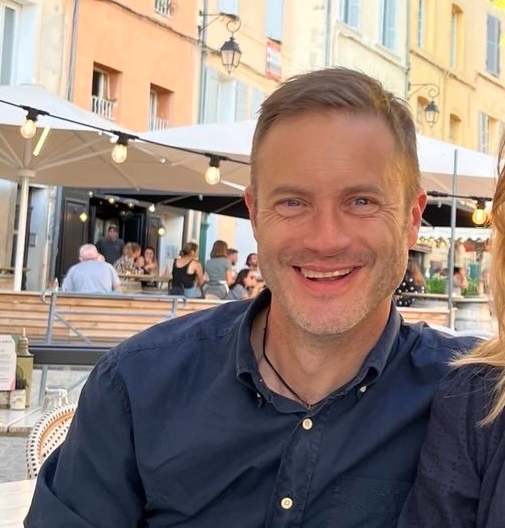
Rev Scott MacSween was ordained an OLM in the Scots Kirk Paris last March and more recently became Presbytery Clerk for the International Presbytery of the Church of Scotland.
In addition to his Church of Scotland duties, he works remotely with New York-based refugee charity the International Rescue Committee.
He lives in Aix-en-Provence in the south of France with his wife Sasha and the couple have two children, Alex and Penny.
What is your current role?
I am an Ordained Local Minister (OLM), but as of 1 January this year, I am Presbytery Clerk to the International Presbytery, which includes congregations from Bermuda to Sri Lanka and 12 charges in 10 countries. It's been a steep learning curve, but I have really enjoyed it.
It was not something I had thought of doing. I was approached by a minister and thought he was joking at first, but a month later he asked me to think about it again and it occurred to me that my working life had prepared me really well for the role. I have worked in strategy, change management and now human resources, a lot of that for not-for-profit international organisations. That is basically what the International Presbytery Clerk spends a lot of time doing and when I thought about it, it made a lot of sense.
Because I'm based in southern France where there is no Church of Scotland congregation, I don't have many opportunities to serve as an OLM, but I work with the local Anglican congregation and lead services for them once a month and am happy to do locum work or pulpit supply for the International Presbytery when needed.
I took a service in Brussels in November, and we just introduced a new minister in the linked charge of Geneva and Lausanne, and I was part of that service, I'll be in Paris in May and Amsterdam in August.
I enjoy the travel and meeting each of these congregations
What led you to consider ministry?
I was brought up in a Scottish family in Chester where my father was an elder at St Andrew's Presbyterian Church.
I didn't have so much contact with the church after I left to study in Edinburgh and then Aberdeen before beginning my career.
I was also a reservist Army Officer and went on to serve in the Royal Signals full-time for nearly three years, including a tour of Bosnia in the late 1990s, before I carried on with my career.
It was when my wife and I moved to the Netherlands that I really picked up church again, and then, when I got a job in France I became an elder at the Scots Kirk in Paris.
We moved to Kenya to work for a Christian NGO (World Vision), who sent me to Nepal and Senegal before moving back to France and then back to Kenya for my wife's job.
In that job she uncovered some serious corruption, and we were pulled out at 24 hours' notice before the news broke and had to sneak back in under false identities to pack up our home.
It was around this time that the whole ministry thing started. The situation in Kenya could easily have turned very nasty and there could have been a genuine threat to our lives. I started asking: why were we protected? All the Sunday School stories I learned growing up didn't answer that question. Then we went to live in India, and that was a very different experience again with Hindu temples all over the place. I started asking: which God is right? Is it the one I was brought up with or the one the Hindus pray to or the one that I had experienced in Africa?
So, I took some modules from Aberdeen University to answer those questions and really enjoyed it and I found myself in a class on sacramental theology, and realised there were 32 people in the class and 31 of them were studying for ministry in the Church of Scotland. I was the odd one out.
When I told my minister in Paris, he said: ‘Maybe God is trying to give you a message.' Then I went to a Presbytery meeting in Gibraltar and all the ministers I met there were people I could chat to and have a laugh with – not at all like the ministers I knew growing up.
I asked a couple of ministers I know what ministry was like and they said it was one of the best jobs in the world, but also one of the hardest because there were lots of highs and lows, but if I was called, go and talk to someone else.
In the end I talked to 15 ministers from three different denominations – I think I need a lot of persuasion – and they all said to keep exploring it.
I formally entered the discernment stage for the Church of Scotland and at every stage I thought that if it didn't work out, that was fine because I really enjoyed my day job. But at each stage, people saw a sense of call which I didn't really see in myself.
What were the challenges of training for Church of Scotland ministry while living in France?
I was able to do my first placement with the Anglican Church in the south of France who were very happy to welcome me as an English-speaking minister in training because they are short-staffed as well. Then I was a bit stuck because I needed to do a Church of Scotland placement and there wasn't a congregation in the south of France.
One of the options was to work with the French Reformed Church or do something online with Sanctuary First, but I felt I had done enough of that through COVID.

Then I realised that I was spending a lot of time in Scotland. My daughter was at boarding school in Helensburgh, and my son was at Edinburgh University, and I was flying over to see them every few weeks – I needed to find a Church of Scotland congregation and I was in Scotland all the time where there are probably quite a few!
I did my second placement at St George's Tron in Glasgow when I was back in Scotland, and it was a brilliant experience. St George's Tron is another city centre church, so I talked to the minister, Rev Alastair Duncan, to see if we could do similar things in Paris.
By the time I was ready for probation, the Scots Kirk in Paris was in a vacancy so we agreed that I would spend every second month in Paris, living in the manse and basically being the minister even though I wasn't ordained.
I led worship 37 times in that year, far more than an OLM in training would have usually done, so it was really in at the deep end, but the best way to learn because I had complete flexibility to do whatever I saw fit.
Alastair continued as my remote supervisor and I was very well supported, but basically, I was doing full-time ministry while I was there, and it was a shame to walk away at the end of each month.
In Paris, all, but one of the elders is Scottish, but the congregation itself is less and less Scottish as time goes on, so I would have 10 or 12 different nationalities at each service and you have to connect with them on the fundamental level of what we share as human beings.
What attracted you to the role of OLM rather than full-time ministry?
I went in with a completely open mind. I knew that I didn't want to be a Deacon because we don't have Deacons in the International Presbytery, I couldn't really see the difference between Reader and OLM. I felt that I wanted to be able to administer the sacraments, but I didn't see myself as a full-time minister.
I did give it a lot of thought, but I didn't see myself as a full-time minister and OLM seemed to be the right move for me, but that's not to say that at some point I wouldn't consider full-time ministry as I was effectively a full-time minister during my probation at the Scots Kirk.
What have been the highlights of your ministry?
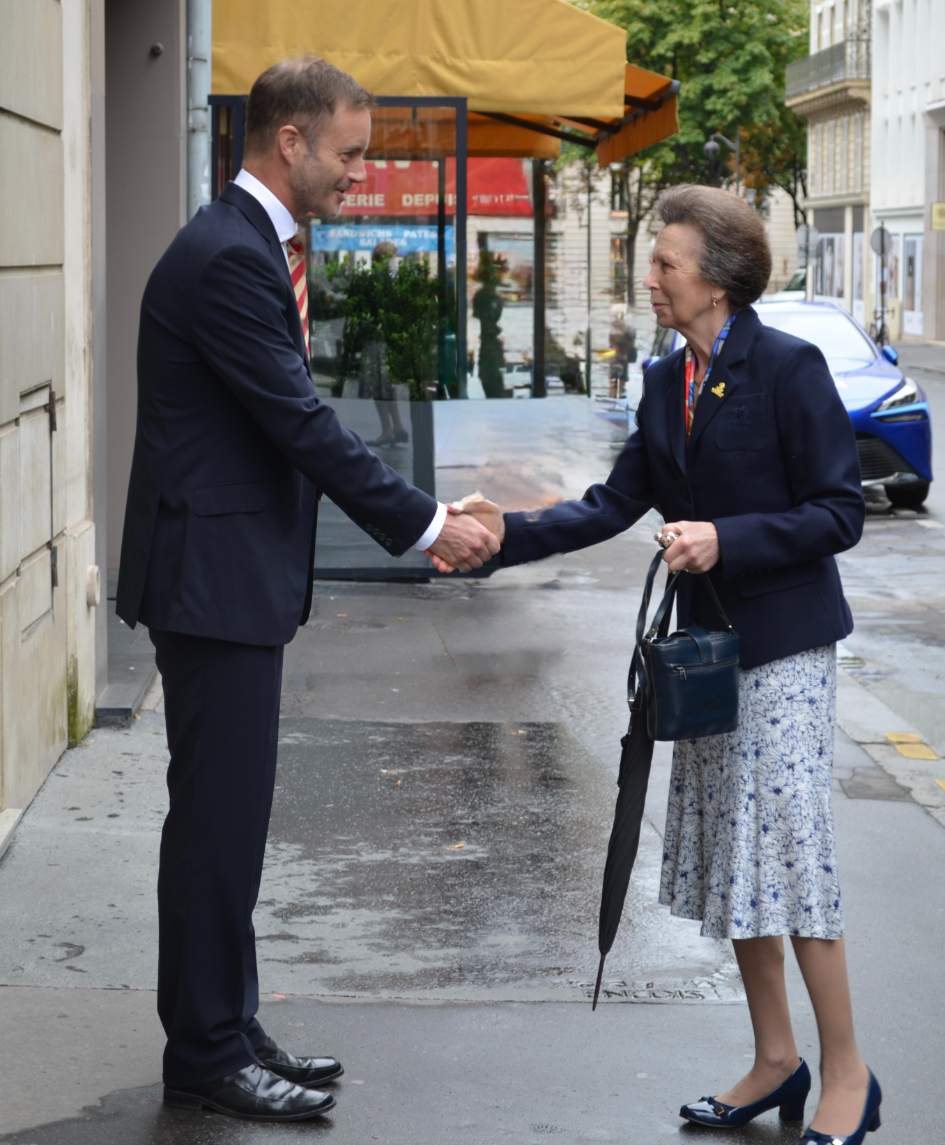
During my year in Paris, we had the Olympics and Princess Anne and the Moderator visited because it was the 100th anniversary of Eric Liddell winning Gold at the 1924 Paris Olympics and preaching in the Scots Kirk instead of running in the 100 metres because it was the Sabbath.
I did a wedding blessing in St Tropez, which all probationers should try to do once in their life! But the real highlights are when you preach on something and someone writes to you a few days later to say that it really touched on something going on in their life. That's what makes it such an amazing job
How does your professional life working for an international charity complement your faith and ministry?
It is not immediately obvious because I work in data and planning with the global HR team, but the reason that job exists is to help work out the intrinsic value of everyone who works for us and how we can help them develop to their full potential. That is very much like ministry.
I don't advertise what I do as a minister, but at the same time I don't hide it and it is fascinating because when people find out I am a minister, we have some incredibly deep conversations because we have already established a relationship through work. We can talk about the stuff that really matters in life, and they open up a lot more with me knowing that I am a minister than they ever would if I was just a work colleague, which is really rewarding on both sides.
The two roles complement each other very well.
Do you have any advice for someone considering following a call to ministry?
There are two things. First, start journalling. I have been journalling every day since discernment because there are ups and downs and there will be days when you think this is absolutely not something you want to do, and others when you think this is fantastic and you can't get enough of it. It will help you recognise the ups and downs and the emotions and events affecting you.
The other thing is talk to loads of ministers because only ministers know what ministry is like and I am happy to talk informally to anyone who might be interested.
What inspires you when the role is challenging?
I have done a lot of different jobs, and I would get bored after a couple of years, but ministry is so vast the scale of it blows my mind, and just to realise that God wanted me here to do this. It wasn't my dream to be a minister when I grew up. The more I went through the discernment process and the more I found out about it, the more it was clear how this was going to end up.
And a third thing I realised, mainly because of the journalling, was that the bad times will pass.
On my probation, I learned that something would go wrong every single Sunday morning. You don't know what it is from Sunday to Sunday – it could be no pianist or projector or the police would have blocked access to the Church – so every Sunday was a learning experience and you just learned to laugh about it because we were all there together and God wants us to be there and we will figure something out.
More information
If you would like to consider how God might be calling you to serve at this time, you may want to discuss further with your minister or be in touch with your Presbytery to explore local opportunities.
If you are interested in exploring a call to the recognised ministries of the Church, you can find more information on our vocations page and can contact ministry@churchofscotland.org.uk for a Discernment Conversation with one of the Recruitment Team.