
August 2026: Rev Justin Taylor
The Church of Scotland's Talking Ministry monthly series shares personal stories from those serving in Christian ministry, along with resources filled with questions, prayers and reflections to help encourage reflection on how God might be calling you at this time
For August, Rev Justin Taylor speaks about the influence of his South African upbringing on his faith and his current role as the Church of Scotland's minister on the island of Guernsey.
My ministry: Rev Justin Taylor, St Andrew's in the Grange, Guernsey
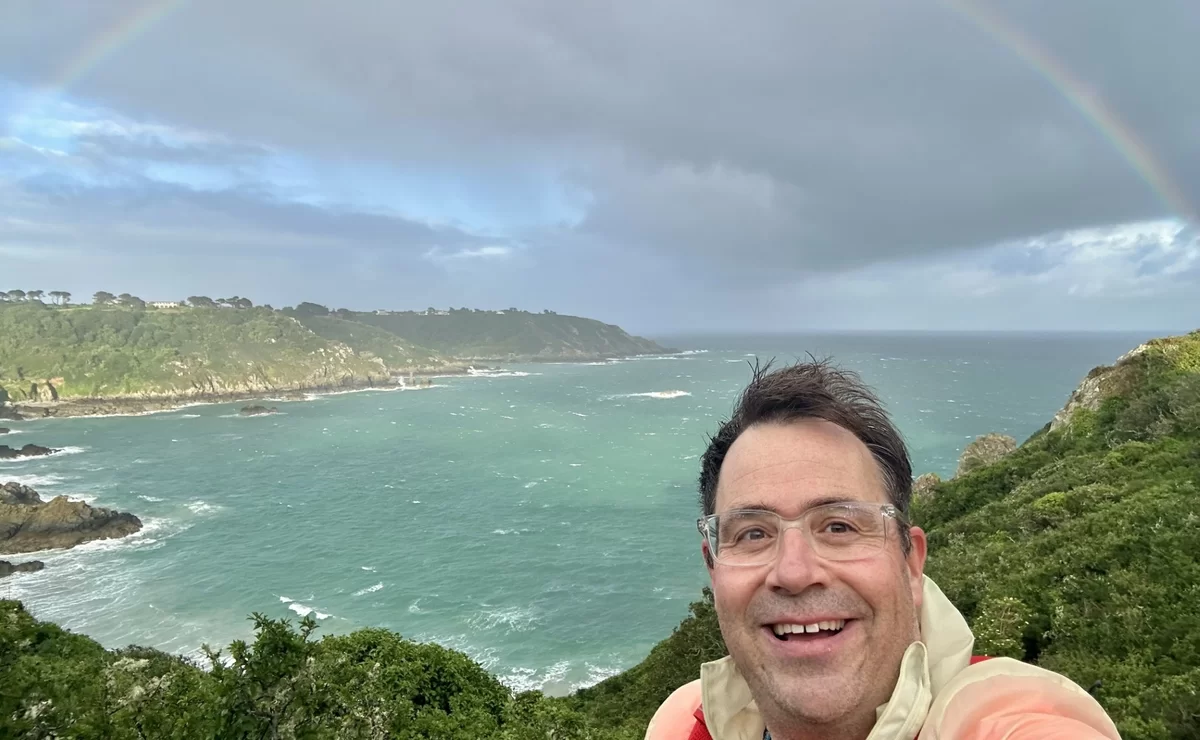
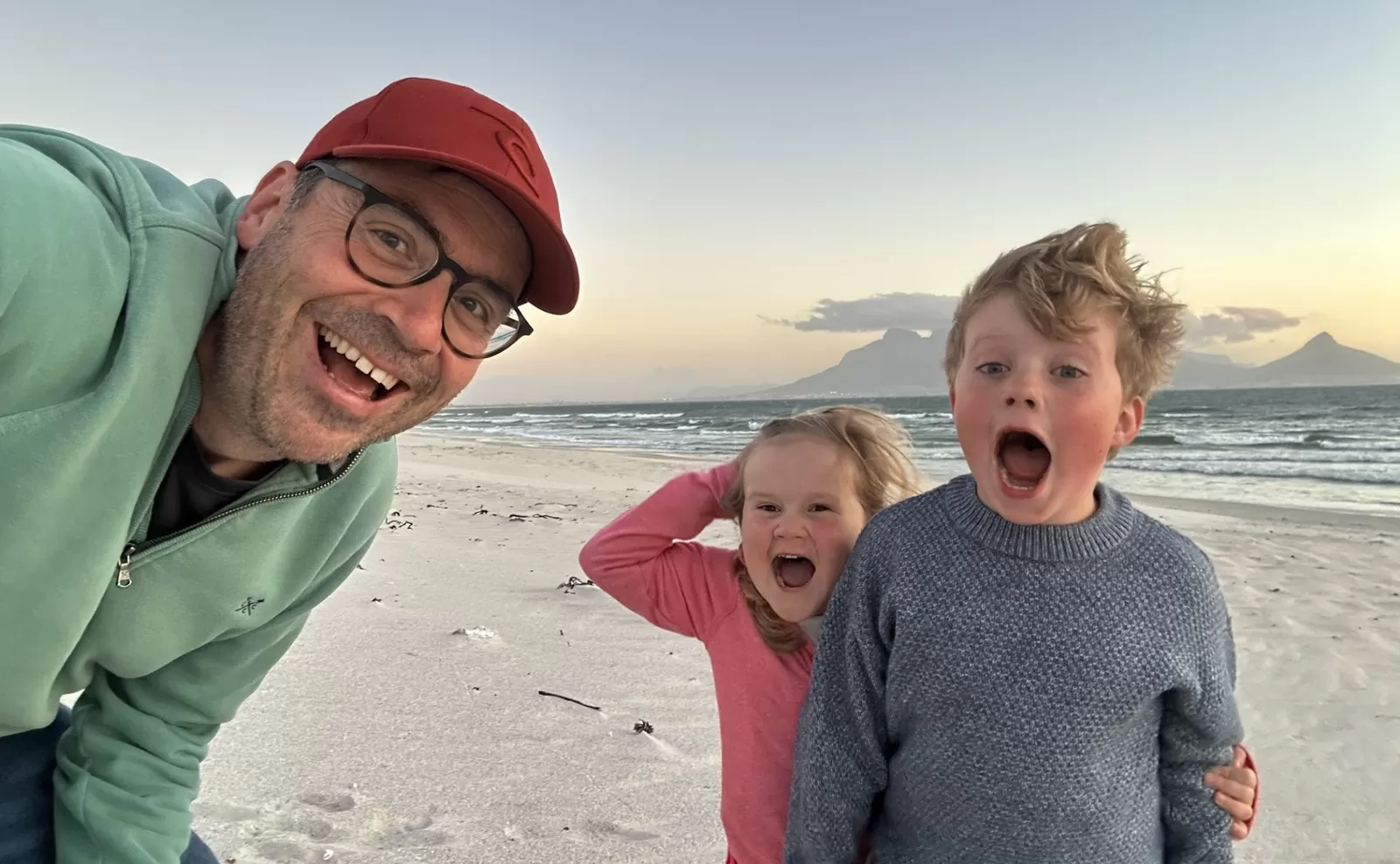
Born in South Africa, Rev Justin Taylor has been the minister of the Kirk's congregation on Guernsey in the Channel Islands for four years. Married to Lesley and father to Emily, Francis and Joy, he also serves as Moderator of the Presbytery of England and the Channel Islands.
What is your faith background?
I was baptised Methodist but began exploring different kinds of church.
I grew up partly during apartheid and partly after it, which sparked my curiosity about Christianity, as apartheid was a religious system before it was a government system. How can someone hold a position that uses the Bible to justify racism when others read the same Bible and were against apartheid?
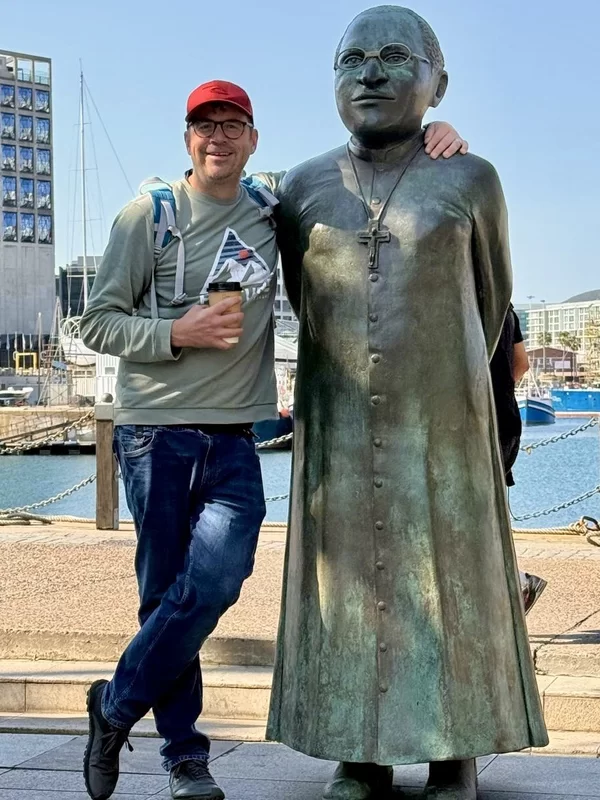
People like Desmond Tutu, Beyers Naude and Steve Biko constantly questioned the Church's role during apartheid. That was influential, but when you are young, you also want to rebel against the system and find your own voice.
I didn't want to be a minister; I wanted to be an academic, so I studied theology at the University of Pretoria. The University is the seminary for the Dutch Reformed Church, Hervormde Church and the Uniting Presbyterian Church of Southern Africa. I dipped into Dutch Reformed Church classes, but because I am English-speaking and not Afrikaans-speaking, I also joined the Black Presbyterian students, who were by far my biggest teachers. Sitting with people I had spent my whole life learning to fear opened so many doors and helped me to understand faith in a far deeper sense
What led you to ministry with the Church of Scotland?
I received a bursary to study in Edinburgh, where I became a youth worker. It just developed from there.
I realised I wanted more connection with people than I would have as an academic. Community is central to ministry for me. If I'm not involved with the community around me, what am I doing?
I find it hard to relate to institutional religion, but this has secretly become a strength. It helps me understand those who don't get church and see their perspective. When asked about improvements for the world, they often talk about justice, care, and love — precisely what we aim to embody. Our goal is to live consciously and differently in the world.
For me, that's the essence of being part of a church.
People get that, so the thing I have struggled most with has been my greatest gift.
I applied for ministry in 2014 and then had three years of probation because I already had the academic qualifications, first at Inverleith St Serf's in Edinburgh and then the other half at Greyfriars in Edinburgh.
Those three years allowed me to mature, helped me understand Scottish culture more than ever, gave me many skills, taught me patience, and helped me establish good routines before I went to a parish, so I understood the balance between family life and ministry.
Training was a gift. If I had to do it again, I wouldn't have shortened it at all.
What led you to Guernsey?
My first charge was at Abbotshall in Kirkcaldy. I adored it, and the church was amazing, but it was during Covid and Presbytery Planning. You had four churches right next to each other, and they had to merge into one.
I came out of that process loving my community but realising I wasn't the person to lead them to the next stage.
Then someone said to me: ‘Have you thought of Guernsey?' And I said: ‘Where's Guernsey?'
We had a holiday there just after lockdown. It was late October, and we were sitting on the beach wearing T-shirts, so we moved here in August 2022 when I was inducted into the charge .
Was it easy to adjust to ministry in Guernsey?
During the first two years, we faced challenges because Guernsey is a small island with a unique culture, and although its population matches Kirkcaldy's, it has 50 churches. As a Church of Scotland community, we must earn our voice within the local society.
It was tough, and I initially felt my ministry was failing, but those years laid the foundation for a deeper, more meaningful ministry. The hardships turned out to be a gift, demonstrating to others my commitment and confirming that this is where I want to serve. We love living here.
Living here has broadened my understanding of Guernsey. Although some believe it is wealthy, about 30 percent of the population faces poverty, relying on food banks and struggling with housing issues. Thanks to its own government, I often engage with State members influencing policy. The community is small, but my ministry extends widely socially.
The ministry takes various forms that shift weekly. For example, I recently met the King during his visit, whilst I often sit with people just released from jail or battling cancer, and I talk with leaders of international investment firms or those facing different hardships. I also represent the Church of Scotland ecumenically at events in the Bailiwick and church gatherings. This work is broad and quite different from parish duties in Scotland.
Additionally, I serve as a hospital chaplain, which adds diverse aspects to my ministry.
Guernsey tends to be socially conservative, yet we are the church have a very clear and historic voice on this island. Recently, we became the first in Jersey and Guernsey to perform a same-sex marriage.
Guernsey defies common stereotypes, and I feel a deep love and affection for the people here. They are truly incredible.
Are the any lessons your ministry in Guernsey might have for Scottish churches?
I'm grateful for this place because it has helped me discover my voice within the community. I have had to learn that I have to earn my right to speak. In Scotland, many Church of Scotland ministers are privileged by the Kirk's legacy in their community, but here, collaboration across denominations is essential. I realize we often overlook other denominations because of our societal standing, but this is an important lesson, and we're learning it gradually.
Another lesson is don't forget about the other Church of Scotland churches outside of Scotland. The Church of Scotland doesn't end in the Scottish Borders. There are many churches doing incredible work.
Another key insight is not to judge a place based on hearsay. I had preconceptions, and this experience has completely shattered them.
Do you have any advice for anyone contemplating ministry?
Embrace the broadness of the Church. Learn from people who are different from you because your voice is not the only voice.
The second point is that there's no such thing as a perfect time to call. I believe in embracing chance and, due to my issues with institutional religion, my calling involved falling into various opportunities. Just accept it and learn to stumble into things.
And one last thing. I have discovered that calling is like being in a children's playground.
We are the ones asking: ‘Should we go on the swings? Should we go on the roundabout?' God says: ‘Go and play. Just go and enjoy it.'
More information
If you would like to consider how God might be calling you to serve at this time, you may want to discuss further with your minister or be in touch with your Presbytery to explore local opportunities.
If you are interested in exploring a call to the recognised ministries of the Church, you can find more information on our vocations page and can contact ministry@churchofscotland.org.uk for a Discernment Conversation with one of the Recruitment Team.